Where Rivaner comes from and what it is
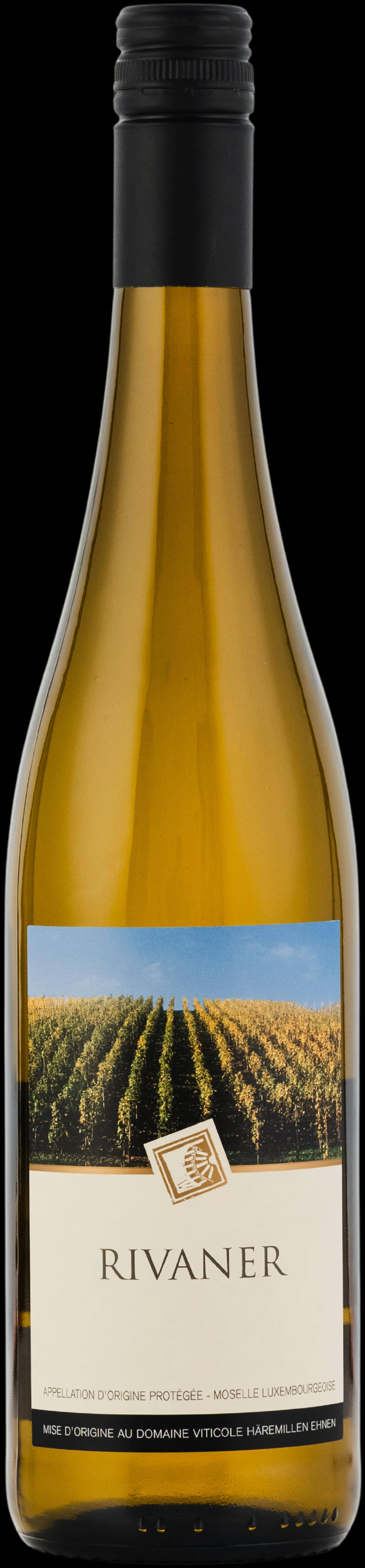
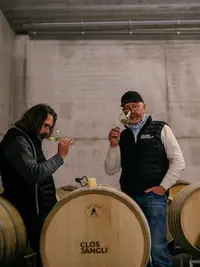
Rivaner is the same grape as Müller-Thurgau, a cross between Riesling and Madeleine Royale bred in Germany in the late nineteenth century. The name Rivaner is most commonly used in Luxembourg and along the Mosel, where the grape has become closely associated with the region's everyday wine culture. It is also grown widely in Germany, Austria, the Czech Republic, and Slovenia, where it appears under both names depending on local convention. The vine ripens early and crops generously, which made it popular with growers across Central Europe for much of the twentieth century. Producers on Free Grape Society who grow it in Luxembourg and the Moselle tend to work with low yields to bring more concentration to a grape that can otherwise be dilute.
How Rivaner tastes and what to drink it with
Rivaner makes light, dry to off-dry white wines with relatively low acidity and a soft, approachable character. Typical aromas lean floral and gently spiced, sometimes with a hint of fresh herbs or green apple, and the wines rarely carry much tannin or bitterness. Because of that softness, Rivaner works well alongside food that might overwhelm a more acidic white: lightly spiced dishes, river fish, mild cheeses, and vegetable-forward cooking. In Luxembourg, it is often the house wine at a traditional table. The style suits early drinking rather than cellaring, so most bottles are best opened within a year or two of harvest. Growers who push for ripeness in warmer vintages can add a rounder, stone-fruit note to the profile. You will find comparable light aromatic whites from the same part of Europe on the Alsace and German wines pages.
Buying Rivaner direct from independent producers
Rivaner rarely appears in supermarkets outside Luxembourg and Germany, which makes direct trade the most reliable route to finding bottles from growers who actually believe in the variety. On Free Grape Society, producers ship directly from their own cellar, with no importer or warehouse in between, so the wine arrives as the grower intended. The producers working with Rivaner on the platform tend to come from the Moselle corridor — Luxembourg's Moselle and the neighbouring German wine regions — where the grape has the longest track record and the strongest producer identity. Free Grape Society is a society of producers, independent experts and wine lovers, not a shop, and Rivaner is a good example of a grape that travels better through that kind of direct relationship than through conventional distribution. Wines are tasted before listing. If you want to explore the broader aromatic white category from Central Europe, the Austrian white wines and Czech Republic wines pages are a useful place to start.