







Colorino: a Tuscan blending grape stepping into the light

Colorino wine has long lived in the shadow of Sangiovese, adding depth and colour to Chianti blends. The producers below are among those growing it in Tuscany and beyond.

Deep colour, firm tannin, and a growing number of producers bottling it on its own.

Color

Dropdown arrow

Type

Dropdown arrow

Country

Dropdown arrow

Region

Dropdown arrow

Grape

Dropdown arrow

Pairing

Dropdown arrow

Sort by

Sort arrow
Colorino

Colorino wines

Colorino is one of Tuscany's oldest documented varieties, recorded in the region for centuries and long valued for the intensity it brings to a blend. It is a thick-skinned grape that ripens late and produces wines with deep ruby colour, firm tannin, and relatively low natural acidity — which is exactly why blenders have reached for it when Sangiovese needs more structure or colour. The wines here are shipped directly from each producer's own cellar, with no importer or warehouse in between.

Previous1 of 1Next

Colorino wine cases

A producer's mixbox is the six-bottle selection they would put together if you visited their cellar and asked what to try. For a grape like Colorino — where the difference between a supporting-role blending wine and a focused single-variety bottling is substantial — tasting a producer's own range side by side is often the most direct way to understand their approach. Free Grape Society is a society of producers, independent experts and wine lovers, not a shop.

View all mixboxes

Wineries

The wineries below work with Colorino in a part of Italy where the variety has been grown for a very long time. Some use it as their grandparents did, as a component in traditional blends; others have moved it to the centre of their range. Reading a producer's own notes is usually the quickest way to see which direction they have taken, and the wine-advice service is there if you would like a recommendation before choosing.

View all wineries

Wine experts

Colorino is not a grape that generates a large volume of critical writing, which makes a direct review from someone who has tasted a specific bottle more useful than usual. Independent wine experts on Free Grape Society review wines they have personally tasted, and those reviews appear on the wine's own page and on the expert's profile. Several of the experts below have reviewed Colorino wines listed on this page, so you can see what they found before you decide.

View all wine experts

Frequently asked questions

How do I order a Colorino wine from Free Grape Society?

Browse the Colorino wines listed above, add a bottle to your basket, and check out with Klarna or a card. Each bottle is fulfilled by the producer who made it and ships directly from their cellar to your door. Delivery takes between four and fourteen days depending on where the producer is based, with an average of around eight to nine days.

What happens if a bottle arrives broken or doesn't taste right?

Send a photo to Free Grape Society customer support within 7 days of delivery. We will arrange a replacement or a refund. Because producers ship directly, quality issues are handled with the producer's direct involvement. Shared responsibility is built into how FGS works.

Can I order Colorino wines from more than one producer in the same order?

Yes. You can add bottles from different producers to the same basket. Each producer handles their own shipment, so multiple producers in one order means multiple packages arriving separately. Shipping is free regardless.

How long does delivery take?

Average delivery is 8 to 9 days from order to door. The full range is 4 to 14 days depending on the producer's location and your delivery address. Wines ship directly from the producer's cellar, not from a central warehouse.

How do I choose between a Colorino bottled on its own and one used in a blend?

A single-variety Colorino will show the grape's character directly — deep colour, firm tannin, and dark fruit. A blend where Colorino is a component will be shaped by the other varieties alongside it, usually Sangiovese. The wine description on each page tells you the composition. If you are unsure which suits you, the wine-advice service can help.

Are all the Colorino wines on Free Grape Society from Tuscany?

Most are. Colorino is a Tuscan variety by origin and that is where the large majority of production sits, particularly in the Chianti zone and surrounding areas. Occasionally a producer outside Tuscany works with it — the producer's region is shown on each wine page.

Which Colorino wine expert can recommend something for me?

The independent wine experts listed on this page have reviewed Colorino wines and wines from the producers who grow it. Browse their profiles to read their notes, or use the wine-advice service to ask a question directly — an expert will respond with a specific recommendation based on what you are looking for.

Why don't you sell supermarket-brand Colorino wines?

Free Grape Society lists wines from independent producers who grow, make, and bottle their own wine. Supermarket-label wines are typically sourced, blended, and bottled by large commercial operations rather than by a named estate. The producers here put their name on the label because they made what is inside it.

Can I find Colorino wines in a regular wine shop or supermarket?

Rarely. Colorino grown and bottled as a single variety by an independent estate is a specialist product that does not reach most retail shelves. The grape is still better known as a blending component, so standalone bottlings tend to be sold direct by the producer or through platforms that work directly with estates.

Where Colorino comes from and what it does in the vineyard

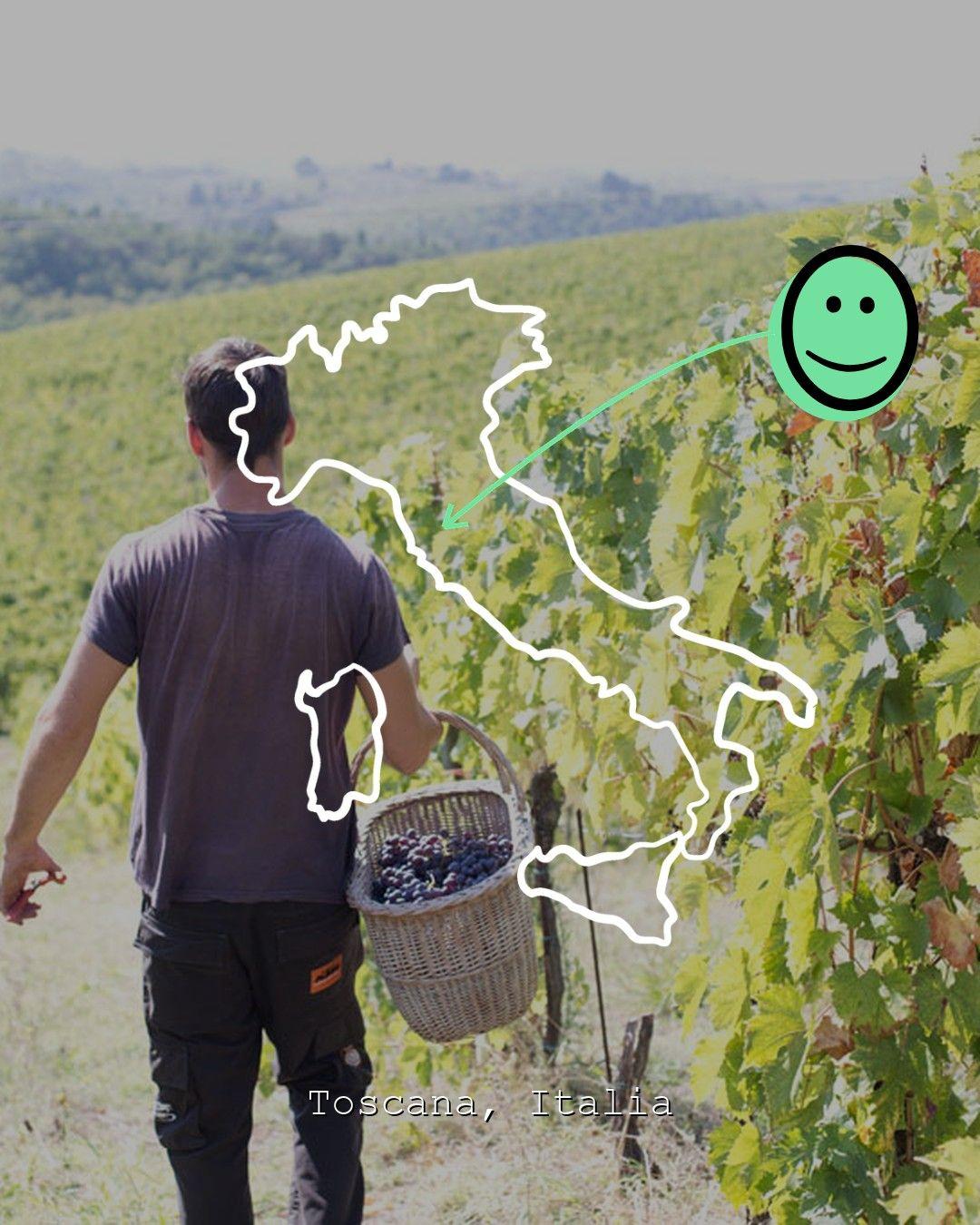
Colorino is an ancient Tuscan variety, documented in the region for centuries and grown almost exclusively there today. Its name is the simplest description of what it does: it adds colour. The grape produces skins with an unusually high concentration of anthocyanins, the pigments that give red wine its depth of hue, which is why winemakers have historically blended it into Sangiovese-based wines rather than bottling it on its own. In Chianti and across the broader Tuscan hills, small proportions of Colorino were added to firm up the colour and add body to wines that can otherwise run pale and lean in cooler vintages. You will find the estates that grow it among the Tuscan wineries and their wines on the Tuscany wines page.

What Colorino tastes like as a varietal wine

When producers bottle Colorino as a single variety — which remains relatively uncommon — the wine tends to be deep ruby in the glass, with firm tannins, relatively high acidity, and flavours that run toward dark cherry, dried herbs, and leather. It is a structured wine that rewards food, particularly the Tuscan table: roasted meats, aged pecorino, and dishes built around olive oil and herbs. Its natural acidity makes it a good partner for fatty or rich preparations. Because so few estates release it as a standalone bottling, finding one is genuinely an occasion. The producers who do tend to be small, independent growers with a particular attachment to native varieties — the kind you find on Italian wines across Free Grape Society. If you want to explore the broader family of indigenous Tuscan reds, Canaiolo, Ciliegiolo, and Foglia Tonda are close neighbours worth tasting alongside it.

Buying Colorino direct from independent producers

Because Colorino is a rare commercial variety, the producers who bottle it are almost always small estates with a strong identity and a deliberate reason for working with it — a commitment to native Tuscan grapes, an old vineyard block, or a belief that the variety deserves to be understood on its own terms. On Free Grape Society, those producers ship directly from their own cellars, with no importer or warehouse in between. Wines tasted before listing means the selection reflects real knowledge of what is in the bottle. Free Grape Society is a society of producers, independent experts and wine lovers, not a shop — and for a grape as niche as Colorino, that direct relationship with the grower is often the only way to find it at all. Browse the full range of Italian red wines or go directly to Tuscany to see what is currently available.