

Independent producers farming Abruzzo's vineyards

Abruzzo wineries range from family estates with deep local roots to a newer generation of growers rethinking how the region's grapes are farmed and made. Browse producers working directly with their own land.

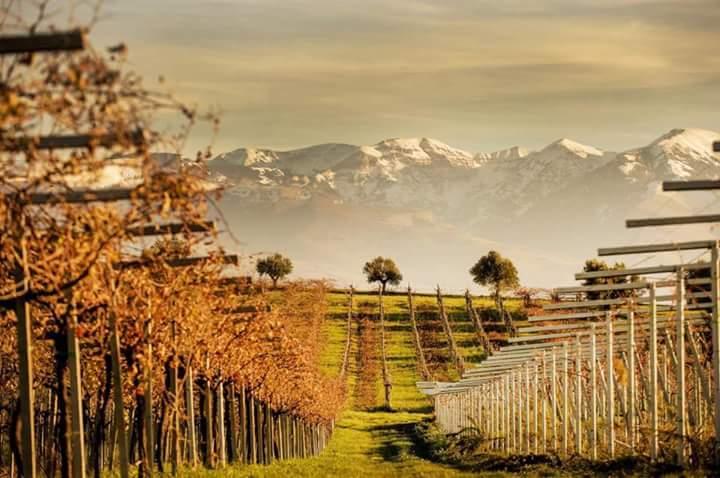
From the Gran Sasso foothills to the Adriatic coast, small estates working Montepulciano and Trebbiano across a region that rarely trades on its name.

Country

Dropdown arrow

Region (1)

Dropdown arrow

Production Volume

Dropdown arrow

Sort by

Sort arrow
Abruzzo

Abruzzo wines

Several Abruzzo producers also compose a wine case: six bottles from their own cellar, selected by the grower as a single recommendation rather than mixed across estates. It is a practical way to read one producer's range in a single order — how they handle Montepulciano at different elevations, or where they place their Trebbiano alongside a rosato. Free Grape Society is a society of producers, independent experts and wine lovers, not a shop, and the cases come directly from the cellar that made them.

View all wines from Abruzzo

Wine experts

Independent wine experts rate and review wines they have personally tasted, and their notes appear on the wine page and on the expert's own profile. Several experts below have reviewed wines from Abruzzo producers featured here, building a public record that sits alongside the producer's own description.

View all wine experts

Frequently asked questions

How do I buy directly from an Abruzzo producer on Free Grape Society?

Choose a producer from this page, browse their wines, and add bottles to your basket. Checkout is handled by Free Grape Society — the producer ships directly from their own cellar. Payment is by card or Klarna, and delivery takes between four and fourteen days depending on where the wines are shipped from.

What happens if a bottle arrives broken or doesn't taste right?

Send a photo to Free Grape Society customer support within 7 days of delivery. We will arrange a replacement or a refund. Because producers ship directly, quality issues are handled with the producer's direct involvement. Shared responsibility is built into how FGS works.

Do Abruzzo producers ship whole cases or can I mix individual bottles?

Both. Individual bottles can be ordered from any producer on the platform. If a producer has composed a wine case, that arrives as six bottles selected by the grower. You cannot mix bottles across different producers into a single order — each producer ships their own wines directly.

How long does delivery take?

Average delivery is 8 to 9 days from order to door. The full range is 4 to 14 days depending on the producer's location and your delivery address. Wines ship directly from the producer's cellar, not from a central warehouse.

How do I find the right Abruzzo producer for the style I am looking for?

Start with the grape or style: Montepulciano d'Abruzzo for structured reds, Cerasuolo d'Abruzzo if you want the region's distinctive dry rosato, Trebbiano d'Abruzzo for whites. Producer pages show the wines they list, the vineyards they work, and any expert reviews, which together give a clear picture of where a grower's strengths sit.

Are the Abruzzo producers on Free Grape Society small estates or larger wineries?

The producers listed here are independent — family estates and growers working their own land. Free Grape Society does not work with large industrial wineries or negociants. The focus is on producers who grow their own grapes and make their own wines, which in Abruzzo often means relatively small holdings farmed by the same family across generations.

Which Abruzzo wine expert can recommend something for me?

The wine experts listed on this page have reviewed Abruzzo wines and can point you toward a producer or a style that fits what you are looking for. Fill in the contact form on an expert's profile and they will come back to you directly. Advice is free and independent — experts are not employed by Free Grape Society and do not represent any producer.

Why don't you carry every wine from every Abruzzo producer you work with?

Producers send samples, and wines are tasted before listing. That means only wines that have been assessed make it onto the platform — not every bottle a producer makes will be there, and not every producer in the region will be listed. The selection reflects direct relationships with growers whose wines have been tasted, not a complete inventory of what Abruzzo produces.

Abruzzo wines are widely available in supermarkets — why buy through Free Grape Society?

Supermarket Abruzzo is mostly high-volume Montepulciano produced at scale for export. The producers here are independent growers working smaller parcels, setting their own prices, and shipping directly. That means different wines, a direct relationship with the person who made them, and no importer or warehouse adding margin between the cellar and your door.

The producers of Abruzzo

Abruzzo sits on Italy's Adriatic coast, wedged between the Gran Sasso massif and the sea. That geography gives its producers an unusual set of conditions: cool air from the mountains moderates summers that would otherwise tip toward heat stress, while the Adriatic holds enough warmth to carry the harvest through October. Most estates here are small, family-held operations that have farmed the same hillside parcels for generations. Montepulciano d'Abruzzo is the grape that built the region's reputation — a thick-skinned red that ripens late and produces wines that can be dense and age-worthy or light and direct depending on how the grower handles it. Trebbiano d'Abruzzo, which in this region often means Bombino Bianco or a local biotype distinct from the Trebbiano found elsewhere in Italy, accounts for much of the white production. A number of producers have spent the past two decades pushing both varieties further, working lower yields and longer macerations to show what the region's soils can do when the grower commits to quality over volume. Browse the full range of Abruzzo wineries or explore Italian producers across the country.

How we choose our producers

We work directly with the growers behind the wines, so we get to know how they farm and what they charge before a single bottle is listed. Producers send samples, and those samples are tasted before a wine is listed, which means the decision rests on what is in the glass rather than on a label or a reputation. We look for pricing that reflects the work in the vineyard without the mark-ups that importers and warehouses add, and we keep the relationship direct so the grower sets their own terms. Once a wine is listed, independent wine experts rate and review individual bottles, building a public track record that buyers can read on the wine page. We do not try to carry the full output of a region: we list wines tasted before listing, from producers we have a direct relationship with. Free Grape Society is a society of producers, independent experts and wine lovers, not a shop — and that shapes every decision about which estates join.

Winemaking traditions in Abruzzo

Abruzzo's winemaking history is rooted in Montepulciano, a variety that arrived in the region centuries ago and gradually became its own. The grape's thick skin and late ripening made it a natural fit for the coastal hills south of Pescara, where the growing season stretches long enough to develop tannin and colour fully. Traditionally, wines were made to be robust and dark, reflecting the variety's natural concentration. Over the past few decades a different current has run through the region: producers experimenting with shorter maceration times, earlier picking windows and clay amphora to bring out a fresher, less extracted side of Montepulciano. Cerasuolo d'Abruzzo, the region's rosé DOC made from the same grape, is one of Italy's most serious rosés — deep in colour and structured enough to sit at a table rather than alongside it. For whites, some producers are revisiting old-vine Trebbiano parcels that were overlooked during decades when light, neutral whites dominated. The wines of Abruzzo and the adjacent regions of Campania and Marches trace a broad stretch of central and southern Italian winemaking that rewards careful attention to who is making the wine and where exactly their vines sit.