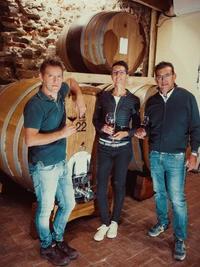
Vespolina: a rare Piedmontese red from independent growers

Vespolina wine is made from one of Piedmont's oldest native varieties, grown in the northern reaches of the region alongside Nebbiolo and Bonarda. The producers below keep it alive.

Tannic, perfumed, and grown almost nowhere outside northern Italy.

Color

Dropdown arrow

Type

Dropdown arrow

Country

Dropdown arrow

Region

Dropdown arrow

Grape

Dropdown arrow

Pairing

Dropdown arrow

Sort by

Sort arrow
Vespolina

Vespolina wines

Vespolina is a native red grape from the northern Piedmont, where it has been grown for centuries in the hills around Ghemme, Gattinara, and the Colline Novaresi. It produces wines with firm tannin, lively acidity, and a floral character — often described as rose and violet — that sets it apart from the bigger Nebbiolo-based reds of the region. Most of the world's Vespolina is grown within a small cluster of DOC and DOCG zones in this corner of Italy, which is why it rarely appears outside specialist cellars. On Free Grape Society, each bottle ships directly from the producer's own cellar, with no importer or warehouse in between.

Previous1 of 1Next

Vespolina wine cases

A wine case here is a producer's own selection of six bottles — the recommendation they would make if you visited their cellar in person. For a grape as uncommon as Vespolina, a case is often the most useful way to understand what a producer does with it: across vintages, blending choices, or different subzones within the Colline Novaresi. Free Grape Society is a society of producers, independent experts and wine lovers, not a shop.

View all mixboxes

Wineries

The growers below work in one of Italy's most historically rich but least-known wine zones. Northern Piedmont has been producing wine from Nebbiolo, Vespolina, and Bonarda for as long as records exist, but it has rarely attracted the attention that the Langhe — home of Barolo and Barbaresco — receives. Producers here tend to work at a smaller scale and with a stronger focus on local varieties. If you want to talk through the differences between estates or styles before choosing, the wine-advice service is there to help.

View all wineries

Wine experts

Vespolina is uncommon enough that a second opinion is genuinely useful before buying. Independent wine experts on Free Grape Society review wines they have personally tasted, and their notes are visible on each wine page and on the expert's own profile. Several of the experts below have reviewed Vespolina wines featured on this page, so you can read what they found before deciding.

View all wine experts

Frequently asked questions

How do I order Vespolina wine on Free Grape Society?

Browse the Vespolina wines listed above, add bottles to your basket, and check out via Klarna or card. Each bottle ships directly from the producer's own cellar. Delivery takes between four and fourteen days depending on where the producer is based, and shipping is free.

What happens if a bottle arrives broken or doesn't taste right?

Send a photo to Free Grape Society customer support within 7 days of delivery. We will arrange a replacement or a refund. Because producers ship directly, quality issues are handled with the producer's direct involvement. Shared responsibility is built into how FGS works.

Can I order Vespolina wines from more than one producer in the same order?

Yes. You can add wines from several producers to the same order. Because each producer ships from their own cellar, bottles from different producers may arrive in separate deliveries. You will be kept informed of each shipment.

How long does delivery take?

Average delivery is 8 to 9 days from order to door. The full range is 4 to 14 days depending on the producer's location and your delivery address. Wines ship directly from the producer's cellar, not from a central warehouse.

How do I choose between different Vespolina wines?

Vespolina is grown across several DOC and DOCG zones in northern Piedmont, including Colline Novaresi, Ghemme, and Gattinara, and blending proportions and winemaking choices vary between producers. Reading the producer's own notes is a good starting point. The wine-advice service connects you with an independent expert if you want a recommendation tailored to what you are looking for.

Why are there so few Vespolina wines available?

Vespolina is one of the rarest native varieties in Piedmont and is grown almost exclusively in a small cluster of zones in the northern part of the region. Plantings are limited, production volumes are small, and most bottles never leave Italy. Free Grape Society works directly with the growers who still cultivate it, which is one of the few ways to find it outside the region.

Which Vespolina wine expert can recommend something for me?

The independent wine experts listed on this page have reviewed Vespolina wines they have personally tasted. Browse their profiles to read their notes, or submit a question through the wine-advice service and an expert will respond with a recommendation based on what you are looking for.

Why don't you sell supermarket-brand Vespolina wines?

Vespolina is a rare, low-production variety grown by a small number of estates in northern Piedmont. It has never entered supermarket distribution in meaningful volumes. Free Grape Society works with independent producers who grow and bottle it themselves — the wines here are not available in retail and come directly from the growers.

Can I find Vespolina wine in European wine shops or online retailers?

Vespolina rarely reaches retail outside Italy. Specialist wine merchants occasionally stock a bottle or two, but consistent availability is unusual. Buying directly from the producer through Free Grape Society is one of the most reliable ways to access it, with bottles shipped from the grower's own cellar to your door.

Where Vespolina comes from and what makes it distinct

Vespolina is a red grape native to the northern reaches of Piedmont, where it grows alongside Nebbiolo and Croatina in the subalpine foothills around Novara and Vercelli. Its name is thought to derive from the Italian word for wasp — vespa — a reference to the grape's attraction to insects when ripe, or possibly to the sharp acidity the variety carries even at full maturity. Historically it was blended into the structured reds of the area, particularly in the Ghemme and Boca appellations, where it contributes colour, fragrance and a lifted floral character that Nebbiolo alone does not always provide. Today a small number of growers vinify it as a single variety, and those bottles tend to show the grape's personality clearly: pale ruby, firm tannin, violet and dried rose on the nose, with tart red fruit and a mineral edge. It is one of the more obscure varieties in Italian wine, but growers who work with it tend to be committed to it. You can also find wines from related grapes from the same part of northern Italy, including Barbera, Nebbiolo and Grignolino.

How Vespolina tastes, and what to drink it with

Vespolina sits at the lighter, more aromatic end of Piedmont's red grape spectrum. The wines are typically pale in colour, closer to a cool-climate Pinot Noir than to Barolo, with pronounced acidity and moderate tannin rather than weight and extraction. The aromatics lean floral — violet, dried rose petal, sometimes a hint of white pepper — with red cherry and cranberry on the palate and a savoury, earthy finish. That combination of bright acidity and fragrance makes it a natural match for food. It works well with cured meats and salumi, with risotto, with braised chicken and rabbit, and with the mushroom and truffle dishes that appear regularly in Piedmontese cooking. The acidity also gives it an affinity with hard cheeses. Because it is grown by a relatively small number of independent producers, tasting a Vespolina is often as much about understanding a specific grower's approach as it is about the grape itself — which is part of what makes it interesting for anyone already familiar with better-known Italian varieties like Sangiovese or Nero d'Avola.

Buying Vespolina directly from the producers who grow it

Because Vespolina is produced in small quantities by a limited number of estates, it rarely reaches general retail. The growers who cultivate it tend to be deeply attached to the variety — often the same families working the same hillsides in Novara and Vercelli for several generations. On Free Grape Society, those producers ship directly from their own cellars, with no importer or warehouse in between, which means the wine you receive is the wine the grower chose to bottle, priced and shipped on their own terms. If you are exploring northern Italian reds more broadly, the Piedmont wineries page shows all the independent producers from the region currently on the platform, and the Piedmont wines page brings together the full range of what they make. Free Grape Society is a society of producers, independent experts and wine lovers, not a shop — wines from varieties like Vespolina find their audience here precisely because the platform is built around growers rather than around what moves easily off a supermarket shelf.