
Umbrian wines from independent estates — direct from the cellar

Umbrian wines from independent estates. No industrial labels. Every wine tasted before listing.

Sagrantino, Orvieto, and the producers behind them.

Color

Dropdown arrow

Type

Dropdown arrow

Country

Dropdown arrow

Region (1)

Dropdown arrow

Grape

Dropdown arrow

Pairing

Dropdown arrow

Sort by

Sort arrow
Umbria

Umbrian wines

Umbria is the only landlocked region in central Italy with a significant wine tradition. It has two DOCG zones: Montefalco Sagrantino and Torgiano Rosso Riserva. Sagrantino is one of the most tannic red varieties in Italy, requiring a minimum of 37 months aging before release. The producers who grow it tend to be small operations, many still family-run across two or three generations. Browse the wineries below to see who ships directly from Umbria.

Previous1 of 1Next

Umbrian producers

A mixbox on Free Grape Society always contains exactly 6 bottles, all from one producer, composed by that producer as their own recommendation. Not a buyer's selection assembled from multiple estates. The producer decides what goes in the box. Several of the Umbrian producers listed above also offer sample boxes, which is a straightforward way to taste across their range before committing to single bottles.

Wine experts

Independent wine experts on Free Grape Society rate and review wines they have personally tasted. Their reviews appear on the wine page and on the expert's own profile, so you can follow their track record over time. Several of the experts below have reviewed Umbrian wines featured on this page. You can browse their profiles to find one whose speciality aligns with what you are looking for, or use the Wine Advice service to ask directly.

Frequently asked questions

How do I order Umbrian wines on Free Grape Society?

Browse the wines listed on this page and add bottles to your cart. Each listing shows the producer, appellation, and vintage. You pay once at checkout. Wines ship from the producer's cellar in Umbria directly to your address. No account is required to browse the selection.

What happens if a bottle arrives broken or doesn't taste right?

Send a photo to Free Grape Society customer support within 7 days of delivery. We will arrange a replacement or a refund. Because producers ship directly, quality issues are handled with the producer's direct involvement. Shared responsibility is built into how FGS works.

Can I order wines from multiple Umbrian producers in one order?

Yes. You can add wines from different producers to a single cart and check out in one transaction. Because each producer ships independently, you may receive separate deliveries from a single order. Delivery times vary by producer location.

How long does delivery take?

Average delivery is 8 to 9 days from order to door. The full range is 4 to 14 days depending on the producer's location and your delivery address. Wines ship directly from the producer's cellar, not from a central warehouse.

How does Free Grape Society decide which Umbrian wines to list?

Every wine on the platform is tasted by our Head of Product before listing. Only wines that pass the quality review go live. Independent wine experts also rate and review individual wines on the platform. No producer pays to be listed, and no wine appears without passing the tasting stage first.

Are Umbrian wines mostly red, or is there a range of styles?

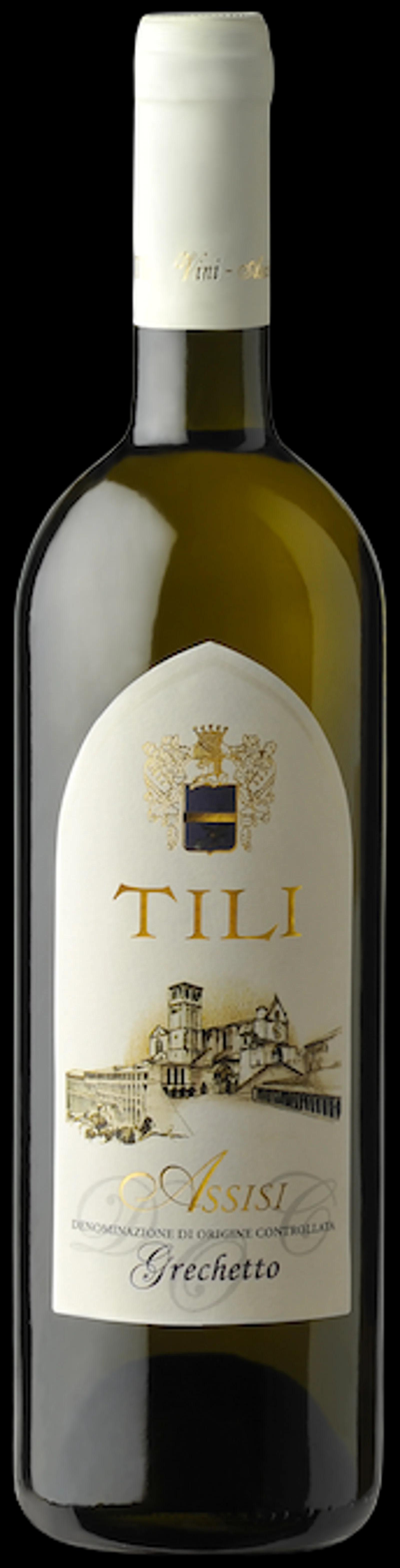
Umbria produces both red and white wines. Sagrantino and Sangiovese dominate the red side, particularly around Montefalco. Orvieto, in the southwestern part of the region, is historically known for white wine, traditionally blended from Grechetto and Trebbiano Toscano. Orange and rosé styles are also produced by some smaller estates.

Which wine expert can recommend an Umbrian wine for me?

Several wine experts on Free Grape Society have reviewed Italian wines, including wines from Umbria. Browse the expert profiles in the section below to find one whose speciality matches your taste. You can message any expert directly and ask for a specific recommendation.

Why don't you sell Umbrian wines from the supermarket brands?

Supermarket brands are produced to a price point and distributed through wholesale chains that add margin at each step. The producers on Free Grape Society ship directly from their cellar. A bottle changes hands once, not three times. That is a different model, and it produces different wines.

Can I find Umbrian wines that are not sold at Systembolaget?

Most wines on Free Grape Society are not available at Systembolaget. Umbrian estates that ship directly tend to produce in smaller volumes than retail distribution requires. Sagrantino in particular is produced by a limited number of estates, most of which are too small to supply a national retail chain.

Appellations and grapes of Umbria

Umbria is Italy's only landlocked region in the central Apennines, and its wine identity is built on two appellations that could not be more different from each other. Sagrantino di Montefalco is one of the most tannic red wines produced anywhere in Italy: the Sagrantino grape accumulates polyphenol levels that routinely exceed those of Barolo. The DOCG requires a minimum of 30 months ageing, with at least 12 in oak. The result is a wine that needs years in bottle before the structure begins to yield. Orvieto, by contrast, is built on white varieties — historically Grechetto and Trebbiano Toscano — and has been a reference point for central Italian white wine since the medieval period. Grechetto, the more characterful of the two, is now often vinified as a single-variety wine outside the Orvieto blend, producing results with texture and grip that Trebbiano alone cannot achieve. Sangiovese also plays a significant role across Umbria's broader DOC landscape, particularly in Torgiano, where it forms the backbone of both the DOC and the rarer Torgiano Rosso Riserva DOCG. The region contains 13 DOC and 2 DOCG designations in total — a density that reflects how varied its soils and elevations are across a relatively compact territory.

How Umbrian producers approach the vineyard

Umbria has a higher proportion of certified organic and biodynamic producers relative to its total output than most Italian regions of comparable size. The terrain is part of the reason: cooler nights at elevation, good diurnal range, and low humidity across much of the interior reduce disease pressure and make chemical intervention less structurally necessary. Many estates working with Sagrantino have moved toward extended maceration experiments, trying to manage tannin extraction without losing the grape's natural density. Others are revisiting passito-style Sagrantino — the historic version, where grapes are dried before fermentation — as a way of softening tannin through concentration rather than oak. Independent Umbrian producers on Free Grape Society set their own prices and ship directly from their cellars. No importer, no wholesaler. The price you see is the price the producer agreed to. Several estates work at altitudes between 400 and 600 metres above sea level, where the growing season is measurably longer than in the valley floor vineyards and acid retention in the grapes is higher at harvest.

Umbria in the context of central Italian wine

Umbria shares borders with Tuscany to the north and west, Lazio to the south, and Marche to the east. The proximity to Tuscany has historically shaped both the grape mix and the commercial identity of Umbrian wine — Sangiovese is common to both regions, and the Torgiano producers in particular have had to work against the assumption that their wines are simply a southern extension of the Chianti model. The comparison is not accurate. Torgiano soils are predominantly clay and limestone, with a mineral character distinct from the galestro and alberese schists that define the Chianti Classico zone. Sagrantino has no equivalent in Tuscany or anywhere else in Italy: it is genetically isolated, and DNA profiling has not established a clear relationship with any other Italian variety. For buyers already familiar with Nebbiolo or the tannic end of Sangiovese, Sagrantino represents a structurally different challenge — not harder to appreciate, but requiring a different frame. Bottles from Marche, Umbria's eastern neighbour, appear in the same conversations about under-known central Italian regions. Both reward attention that the more established appellations tend to absorb.