 Umbria, Italy
- Body
- Acidity
- Tannin
- Fruitiness
- Oak
- Style
- Soft & berry-rich
- Dark berries
- Red berries
- Pairs with
- Aperitif
- Asian cuisine
- Beef
- Buffet food
- Charcuterie
- Goat cheese
- Mature and hard cheese
- Mild and soft cheese
- Lamb
- Mushrooms
- Party drink
- Pork
- Flavored shellfish
- Spicy food
- Veal
- Vegetables
Your package will arrive at your doorstep within 4 - 16 days
- Pomario will receive and pack your order (1 - 4 days)
- The courier will pick up your order and deliver it straight to your door
About this wine
Food pairings by the winemaker
- Aperitif
- Asian cuisine
- Beef
- Buffet food
- Charcuterie
- Goat cheese
- Mature and hard cheese
- Mild and soft cheese
- Lamb
- Mushrooms
- Party drink
- Pork
- Flavored shellfish
- Spicy food
- Veal
- Vegetables
Vinification, winemaker's own words
- Soils:
- Chalk, Clay, Limestone
- Terroir:
- -
- Harvest:
- Picked by hand
- Fermentation:
- -
- Storage:
- -
- Winemaker:
- Pomario
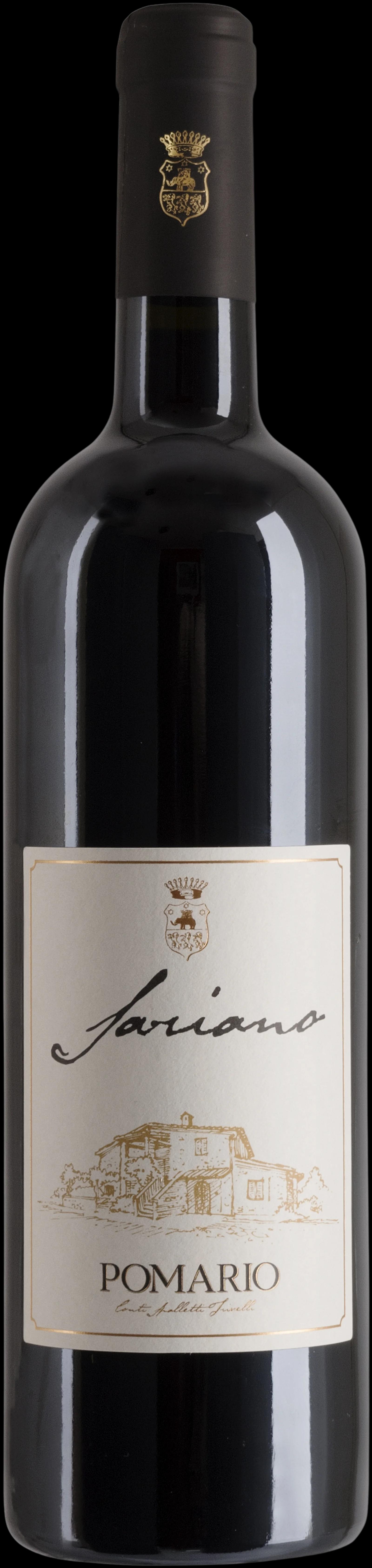
The grapes are carefully selected in the vineyard through low -yield pruning and selective thinning.In late autumn , the harvested grapes are immediately destemmed and undergo sponaneous fermentation ata controlled temperature, using indigenous yeasts in stainless steel tanks of aproximately 25hl.During this phase , the only interventions are occasional pump-overs if necessary. At the end of fermentation and prolonged maceration, the wine is transfered to 25 hl oak casks where it undergoes malolactic fermentation. Sariano remains in the wood on its lees until March of the following year. After the first racking the wine is returned to the casks where it rests until bottling, which takes place after light filtration.
Meet the wine maker
PomarioAbout the wine and its character
- Country:
- Italy
- Region/Subregion:
- Umbria/Colli del Trasimeno
- Classification:
- IGT
- Certification:
- Organic
- Grape:
- Sangiovese 100%
- Vintage year:
- 2020
- Color:
- intense ruby red
- Aroma:
- notes of cherry blacberry and blackurrant with delicate hints of violet
- Taste:
- structured and aromatic with a fruity finish and a distinctive clove note that complements the wine's tanins.
- Alcohol content:
- 13.5%
- Sugar content:
- -
- Acidity:
- -
- pH-value:
- -
- Sweetness:
- -
- Contains sulphite:
- Yes
- Volume:
- 750 ml
- Closure:
- Natural cork
- Bottle:
- Glass
- Best Served:
- 10 - 12 °C
Meet the winemakers behind Sariano
Information provided directly by the winery.

Information
- Winery
- Pomario
- Founding year
- 2004
- Farming area
- 9 ha
- Production
- 38 b/y
Pomario is located in Umbria, between Città della Pieve and orvieto , not far from Lake Trasimeno, at about 500 metres above sea level. The estate lies on a bright , secluded hill surrounded by woodland. The Spalletti Trivelli family , recognising the potential of this unspoiled and unique agro-ecosystem , manages 9 hesctares of vinetards and 8 hectares of olive groves according to the principles of organic and bodynamic agriculture.
Meet Pomario