Savoie wines: Jacquère, Altesse and the high-Alpine slopes

Savoie wine is shaped by altitude, glacial soils and native grapes that grow almost nowhere else. Browse bottles from independent producers working the region's terraced vineyards.

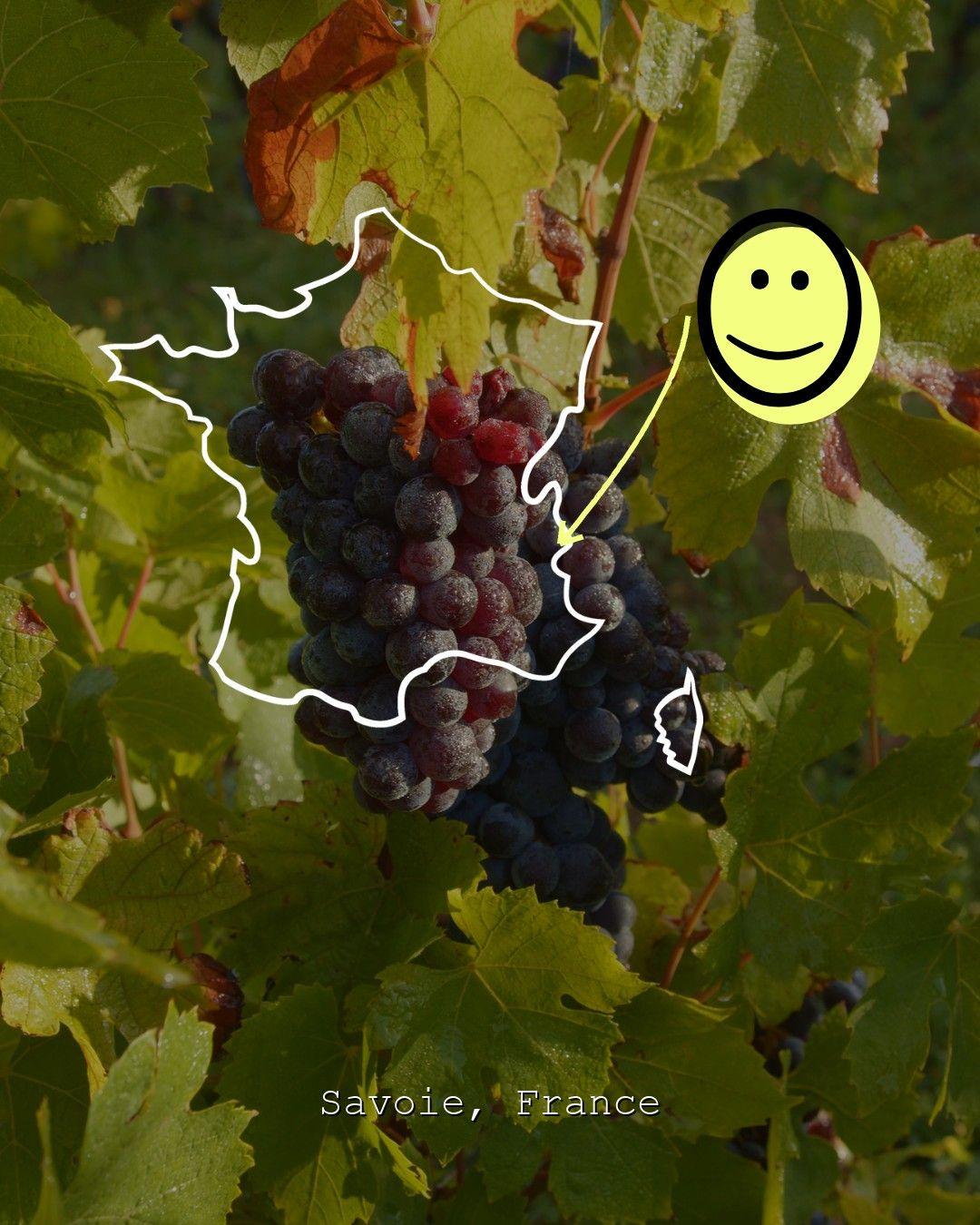
Tucked between the French Alps and Lake Geneva, Savoie produces some of France's most distinctive whites — light, mineral and built for mountain food.

Color

Dropdown arrow

Type

Dropdown arrow

Country

Dropdown arrow

Region (1)

Dropdown arrow

Grape

Dropdown arrow

Pairing

Dropdown arrow

Sort by

Sort arrow
Savoie

Savoie wines

Savoie's vineyards sit at elevations that would be impractical in most of France, scattered across glacial moraines, lakeside slopes and steep terraces cut into the pre-Alpine foothills. The dominant white grape, Jacquère, produces high-acid, bone-dry wines that have little in common with the Chardonnays of Bourgogne to the west. On Free Grape Society, producers ship directly from their own cellar, with no importer or warehouse in between, so the wine that arrives is the one the grower made.

Previous1 of 1Next

Savoie producers

A Savoie wine case is six bottles from one producer, composed by the grower as their own recommendation rather than assembled across estates. For a region this compact yet varied — a single producer may farm whites near Aix-les-Bains and reds higher toward Chambéry — a case is a focused way to understand how one cellar reads its own terroir. Free Grape Society is a society of producers, independent experts and wine lovers, not a shop.

View all wineries from Savoie

Wine experts

Independent wine experts on Free Grape Society rate and review wines they have personally tasted, and their notes appear on the wine page alongside the expert's own profile. Several of the experts listed here have reviewed Savoie wines, making their track records a useful guide for a region whose native grapes are less documented than those of Bordeaux or Bourgogne.

View all wine experts

Frequently asked questions

How do I buy directly from a Savoie producer on Free Grape Society?

Browse the Savoie wineries listed on this page, open a producer profile to see their available wines, and add bottles to your order. Payment is handled securely through Klarna or card, and the producer ships the order directly from their own cellar. Delivery typically takes between 4 and 14 days, with an average of around 8 to 9 days depending on the producer's location.

What happens if a bottle arrives broken or doesn't taste right?

Send a photo to Free Grape Society customer support within 7 days of delivery. We will arrange a replacement or a refund. Because producers ship directly, quality issues are handled with the producer's direct involvement. Shared responsibility is built into how FGS works.

What does buying directly from a Savoie winery mean in practice?

It means the producer sets their own price, packs the order themselves, and ships it directly to your door without passing through an importer or distributor. The wine is handled by the estate until it reaches you. For small Savoie growers working in low volumes, that direct relationship also means you are more likely to find bottles that never reach conventional retail at all.

How long does delivery take?

Average delivery is 8 to 9 days from order to door. The full range is 4 to 14 days depending on the producer's location and your delivery address. Wines ship directly from the producer's cellar, not from a central warehouse.

How do I find the right Savoie producer for what I am looking for?

If you already know a grape — Jacquère, Altesse, Mondeuse, Gamay de Savoie — start there and look for producers specialising in that variety. If you are less certain, reading the producer profile gives you a clear sense of their farming approach, the appellations they work, and the style they are aiming for. Independent wine expert reviews on individual wine pages add a further layer of detail on specific bottles.

Are there Savoie producers working organically or with minimal intervention?

Some of the growers listed here farm organically or follow similar principles, though practices vary between estates. The producer profile describes each winery's approach to the vineyard and the cellar. Savoie's cool Alpine climate and well-drained soils mean many growers already work with relatively low chemical inputs, and the region has a small but established group of producers focused on natural winemaking.

Which Savoie wine expert can recommend something for me?

Free Grape Society has independent wine experts who have tasted and reviewed wines from across France, including Savoie. Visit the wine experts section to browse their profiles and published reviews. You can also submit a question directly and an expert will come back to you with a personal recommendation based on what you are looking for.

Why don't you carry every wine from every Savoie producer you work with?

Savoie producers often make wines in very small quantities, and not every wine from an estate is submitted for listing. Wines are tasted before listing, so only those that have gone through that process appear on the page. Some growers also keep certain cuvées for long-standing customers or the local market, and availability changes each vintage.

Can I buy Savoie wines at a shop or supermarket outside France?

Savoie is one of France's smaller and more geographically remote wine regions, and its wines have historically had limited distribution outside France. Most of what is exported goes through importers who serve specialist wine shops rather than supermarkets. Buying directly through Free Grape Society is one of the more straightforward ways to access independent Savoie producers from outside the region.

Savoie's grapes and what makes them distinctive

Savoie has a grape vocabulary found almost nowhere else. Jacquère is the workhorse white, light and mineral with a faint alpine bite, grown across the Combe de Savoie and the Chautagne plateau. Altesse, also called Roussette, produces richer, more structured whites and has its own appellation in Roussette de Savoie. On the red side, Mondeuse is the grape worth knowing: deeply coloured, peppery, and tannic in a way that echoes Syrah but with a brightness that belongs to the mountains. Gamay also has a foothold here, particularly in Chautagne, producing reds lighter in body than the Mondeuse but well suited to the region's charcuterie and fondue culture. These are varieties that rarely travel beyond the Alps, which is part of why Savoie wines remain genuinely regional in character. Browsing French wines or Gamay from France will show how these alpine styles sit within the wider French picture.

The appellations of Savoie

Savoie is organised under a single regional appellation — Vin de Savoie — with a set of named crus that can append their village name to the label: Apremont, Abymes, Chignin, Arbin and others. Each cru points to a specific terroir, often defined by the glacial moraines and limestone scree left behind by retreating ice. Arbin, for instance, is the heartland of Mondeuse, producing the most age-worthy reds in the region. Chignin is known for its white Jacquère and for Chignin-Bergeron, a lieu-dit where Roussanne — unusual this far north — produces dense, honeyed whites. Roussette de Savoie is a separate appellation reserved for Altesse. Crémant de Savoie, added relatively recently, covers sparkling wines from the region using traditional method production. Understanding which cru a label names tells you the grape and the style before you read any further. For comparison, Burgundy and Alsace share this cru logic, each with its own hierarchy of named sites.

Buying Savoie wine directly from the producer

Savoie is a region where the producer's hand and address matter more than an importer's catalogue. Many estates are small, family-run, and farming specific crus by hand across terrain that resists mechanisation. On Free Grape Society, producers ship directly from their own cellars, with no importer or warehouse adding margin in between, so the wine that arrives reflects what the grower made and priced themselves. Wines are tasted before listing, and independent wine experts rate and review individual bottles, building a public track record visible on each wine page. If you want to explore more of France's independent growers, French wineries and Loire Valley wines are good starting points alongside Savoie. For red wine comparisons rooted in mountain and alpine character, Syrah from France and Pinot Noir from France offer useful reference points.