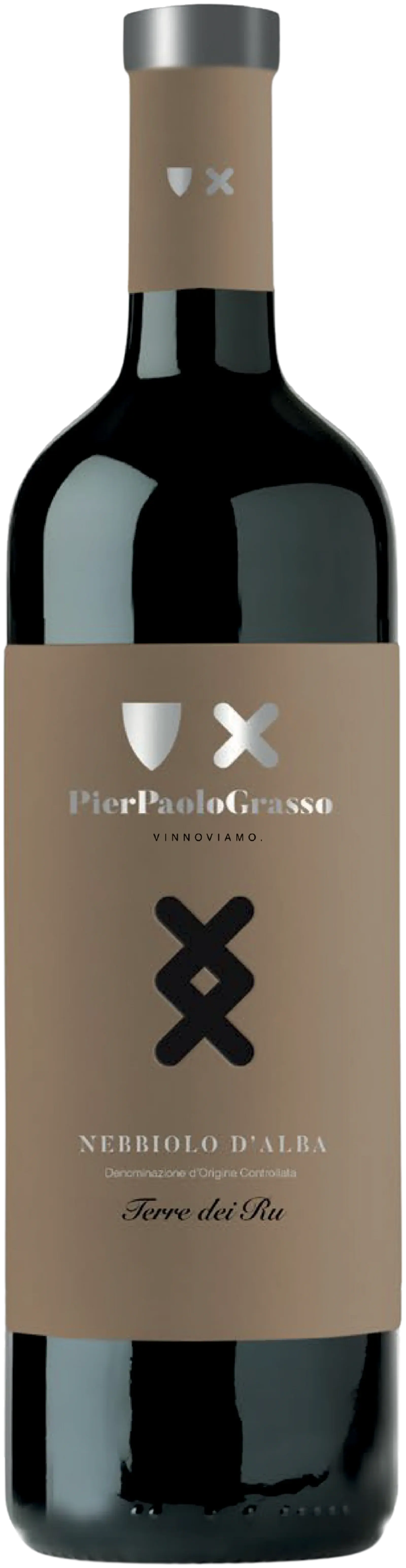
NEBBIOLO D’ALBA DOC TERRE DEI RU
NEBBIOLO D’ALBA DOC TERRE DEI RU
Price incl. alcohol tax, shipping and VAT.
Winemaker's notes
Your package will arrive at your doorstep within4 - 16 days

PIER PAOLO GRASSO will receive and pack your order (1 - 4 days)
The courier will pick up your order and deliver it straight to your door
Product details
About the wine and its characterCountry:
Italy
Region/Subregion:
Piemonte/Langhe
Classification:
DOC
Certification:
-
Grape:
Nebbiolo (100%)
Vintage year:
2018
Color:
Transparent garnet color.
Aroma:
Spicy notes of black pepper and juniper berries leave room for small berries, blackberries, graphite, close eucalyptus and mint.
Taste:
Elegant, full-bodied, fresh, tannic and pleasantly sapid
Alcohol content:
14%
Sugar content:
-
Acidity:
-
pH-value:
-
Sweetness:
Dry
Contains sulphite:
Yes
Volume:
750 ml
Closure:
Natural cork
Bottle:
Glass
Best Served:
16 - 18 °C
Food pairing:
Asian, Beef, Cheese - mature and hard, Lamb, Pasta / Pizza, Veal, Vegetables
Ageing potential:
2 - 15 years
Food pairings by the winemaker
- Asian
- Beef
- Cheese - mature and hard
- Lamb
- Pasta / Pizza
- Veal
- Vegetables
Vinification, winemaker's own words
Soils:
Clay
Terroir:
The vineyard is located in a clayey soil with a layer of river pebbles on the surface.
Harvest:
Picked by hand
Fermentation:
-
Storage:
-
Winemaker:
pier paolo grasso
The grape must ferments in contact with the grape skins and seeds. This stage, known as maceration, allows the wine to extract colour, aromas, tannins, and structure. After crushing and destemming, the must is transferred into temperature-controlled stainless steel fermentation tanks. Here, naturally occurring yeasts convert the grape sugars into alcohol and carbon dioxide, initiating the fermentation process. During the first days of maceration, the wine mainly extracts anthocyanins, the natural pigments responsible for the deep ruby and violet hues of red wines. As fermentation progresses, the extraction of polyphenols and tannins increases, giving the wine greater complexity, structure, and ageing potential. Fermentation temperature is a key factor and is generally maintained between 24°C and 30°C (75–86°F) to encourage optimal extraction while preserving elegance and aromatic quality. During fermentation, the grape skins naturally rise to the surface, forming what is known as the cap. To ensure continuous contact between the liquid and solid parts of the must, several cellar techniques are used: • Punching down (Pigeage): the cap is gently pushed back into the fermenting must. • Pump-over (Remontage): the must is drawn from the bottom of the tank and sprayed over the cap. • Rack and Return (Délestage): the fermentation tank is temporarily emptied, and the wine is then returned to oxygenate and thoroughly mix the fermenting mass. The length of maceration depends on the desired wine style. It may be relatively short for fresh, fruit-forward wines, or considerably longer for wines intended for extended ageing and long-term evolution. Once alcoholic fermentation is complete, the wine is drawn off the skins (racking), separating the liquid from the pomace. The remaining grape skins are then gently pressed to recover the wine still retained within them. The wine continues its journey through ageing and maturation, either in stainless steel tanks or in oak barrels, depending on the style of wine, before completing its evolution in the bottle.
About PIER PAOLO GRASSO
Information provided directly by the winery.


Information
A Place That Welcomes, A Winery That Breathes In the heart of the Langhe, in Neive, Via Moretta 17, stands the new winery: a contemporary space designed not only for production but also for hospitality because those who love wine also love sharing it with others. Here, cutting-edge technology coexists with time-honoured traditions: modern winemaking techniques, respect for biodynamic principles, and natural practices all come together. Every gesture and every decision is guided by the desire to bring a living, healthy, and authentic wine into every glass.