 Piemont, Italien
- Körper
- Säure
- Tannin
- Fruchtigkeit
- Eiche
- Stil
- Straff & kraftvoll
- Dunkle Beeren
- Rote Beeren
- Passt zu
- Rindfleisch
- Ziegenkäse
- Reifer und harter Käse
- Schweinefleisch
- Scharfes Essen
- Kalbfleisch
Ihr Paket wird innerhalb von 4–16 Tagen
- PIER PAOLO GRASSO nimmt Ihre Bestellung entgegen und verpackt sie (1–4 Tage)
- Der Kurier holt Ihre Bestellung ab und liefert sie direkt an Ihre Haustür
Über diesen Wein
Speiseempfehlungen des Winzers
- Rindfleisch
- Ziegenkäse
- Reifer und harter Käse
- Schweinefleisch
- Scharfes Essen
- Kalbfleisch
Vinifikation in den eigenen Worten des Winzers
- Böden:
- Clay, Limestone
- Terroir:
- East facing vineyard. Soil of good structure, gives rise to more wines tannic and suitable for long aging. Calcareous clayed soil.
- Ernte:
- Picked by hand
- Fermentation:
- -
- Lagerung:
- -
- Winzer:
- PIER PAOLO GRASSO
Traditional red-wine vinification with skin maceration, followed by ageing . The grape must ferments in contact with the grape skins and seeds. This stage, known as maceration, allows the wine to extract colour, aromas, tannins, and structure. After crushing and destemming, the must is transferred into temperature-controlled stainless steel fermentation tanks. Here, naturally occurring yeasts convert the grape sugars into alcohol and carbon dioxide, initiating the fermentation process. During the first days of maceration, the wine mainly extracts anthocyanins, the natural pigments responsible for the deep ruby and violet hues of red wines. As fermentation progresses, the extraction of polyphenols and tannins increases, giving the wine greater complexity, structure, and ageing potential. Fermentation temperature is a key factor and is generally maintained between 24°C and 30°C (75–86°F) to encourage optimal extraction while preserving elegance and aromatic quality. During fermentation, the grape skins naturally rise to the surface, forming what is known as the cap. To ensure continuous contact between the liquid and solid parts of the must, several cellar techniques are used: • Punching down (Pigeage): the cap is gently pushed back into the fermenting must. • Pump-over (Remontage): the must is drawn from the bottom of the tank and sprayed over the cap. • Rack and Return (Délestage): the fermentation tank is temporarily emptied, and the wine is then returned to oxygenate and thoroughly mix the fermenting mass. The length of maceration depends on the desired wine style. It may be relatively short for fresh, fruit-forward wines, or considerably longer for wines intended for extended ageing and long-term evolution. Once alcoholic fermentation is complete, the wine is drawn off the skins (racking), separating the liquid from the pomace. The remaining grape skins are then gently pressed to recover the wine still retained within them. The wine continues its journey through ageing and maturation, either in stainless steel tanks or in oak barrels, depending on the style of wine, before completing its evolution in the bottle.
Den Winzer kennenlernen
PIER PAOLO GRASSOÜber den Wein und seinen Charakter
- Land:
- Italy
- Region/Unterregion:
- Piemonte/Langhe
- Klassifikation:
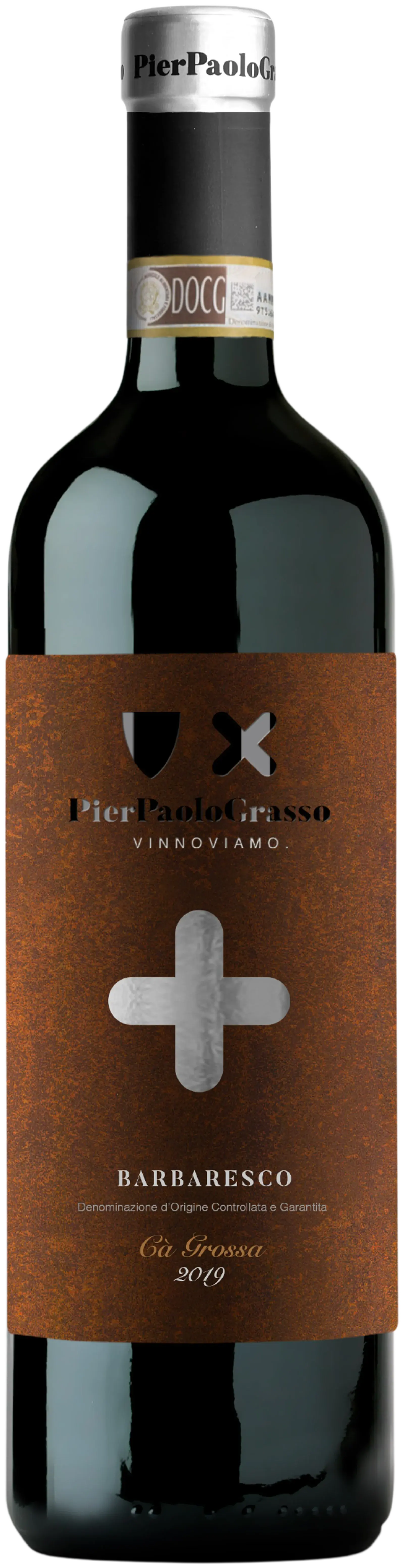
- DOCG
- Zertifizierung:
- -
- Traube:
- Nebbiolo 100 %
- Jahrgang:
- 2019
- Farbe:
- Bright garnet red
- Aroma:
- Floral notes of lavender and wisteria, blackberry and blackcurrant, blood orange, plum for close with a pleasant note of black pepper and flowers chestnut.
- Geschmack:
- It is fresh, soft, with well-tannin smooth, savoury, with a long plum finish and licorice.
- Alkoholgehalt:
- 14%
- Zuckergehalt:
- -
- Säure:
- -
- pH-Wert:
- -
- Süße:
- Dry
- Enthält Sulfite:
- Ja
- Volumen:
- 750 ml
- Verschluss:
- Natural cork
- Flasche:
- Glass
- Am besten serviert:
- 16 - 18 °C
- Reifungspotenzial:
- 5 - 25 years
Lernen Sie die Winzer hinter BARBARESCO DOCG CA' GROSSA MGA kennen
Informationen direkt vom Weingut bereitgestellt.

Information
- Weingut
- PIER PAOLO GRASSO
- Gründungsjahr
- 2000
- Anbaufläche
- 68 ha
- Produktion
- 12 000 b/y
Ein Ort der Gastfreundschaft, ein Weingut, das atmet Im Herzen der Langhe, in Neive, Via Moretta 17, steht das neue Weingut: ein zeitgemäßer Ort, der nicht nur der Produktion, sondern auch der Gastfreundschaft gewidmet ist – denn wer Wein liebt, liebt es auch, ihn mit anderen zu teilen. Hier geht modernste Technologie Hand in Hand mit althergebrachten Traditionen: moderne Weinbereitungstechniken, die Einhaltung biodynamischer Prinzipien und natürliche Verfahren verschmelzen zu einer Einheit. Jede Geste und jede Entscheidung wird von dem Wunsch geleitet, einen lebendigen, gesunden und authentischen Wein in jedes Glas zu bringen.
PIER PAOLO GRASSO kennenlernen