 Bordeaux, Frankreich
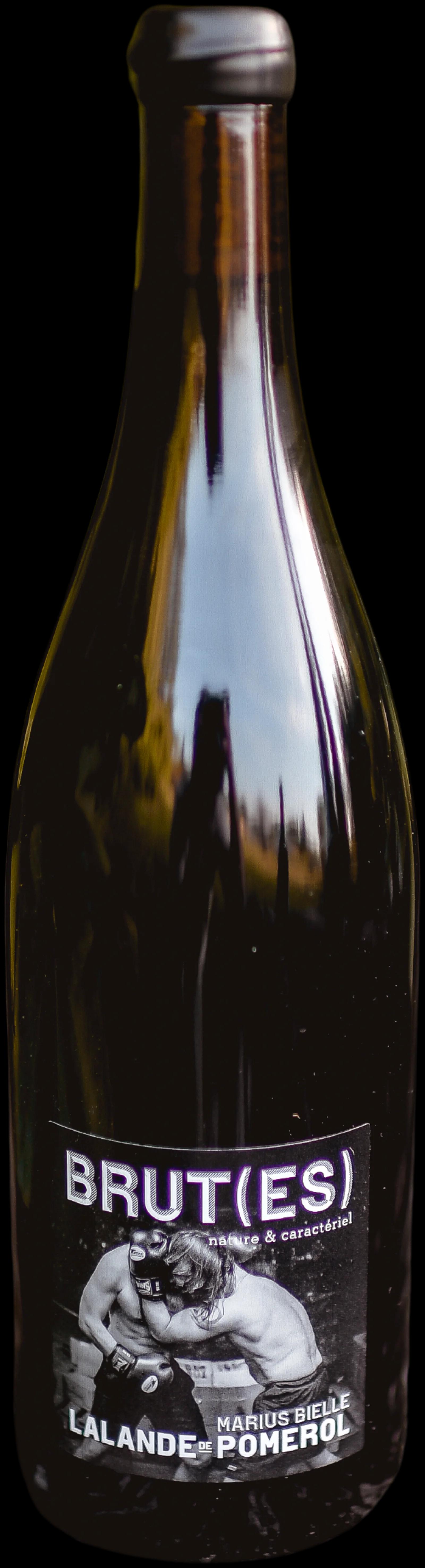
- Körper
- Säure
- Tannin
- Fruchtigkeit
- Aroma
- Stil
- Reif & rund
- Rote Beeren
Ihr Paket wird innerhalb von 4–16 Tagen
- MARIUS BIELLE nimmt Ihre Bestellung entgegen und verpackt sie (1–4 Tage)
- Der Kurier holt Ihre Bestellung ab und liefert sie direkt an Ihre Haustür
Über diesen Wein
Speiseempfehlungen des Winzers
Noch keine Vorschläge
Vinifikation in den eigenen Worten des Winzers
- Böden:
- Gravel, Sand
- Terroir:
- The vineyards of Marius Bielle are located in Lalande-de-Pomerol, on Bordeaux’s Right Bank, an area known for its diversity of soils and its strong Merlot identity. The estate’s parcels are planted on a mosaic of gravel, sand, and clay soils, offering both structure and freshness.
- Ernte:
- Picked by hand
- Fermentation:
- Concrete (100%)
- Lagerung:
- Concrete (100%) 9 months
- Winzer:
- Damien BIELLE
Brut(es) is crafted with a low-intervention approach, guided by the character of the vintage rather than by fixed protocol. The grapes are harvested by hand at optimal ripeness and carefully sorted. Fermentation occurs spontaneously with indigenous yeasts, without temperature over-control, allowing a natural and steady extraction. The maceration is gentle, aiming for texture and energy rather than power. No selected enzymes, no unnecessary additives. The wine is aged with minimal handling to preserve its vibrancy and raw expression. No sulfur is used. The wine is neither fined nor filtered, maintaining its integrity and natural structure.
Den Winzer kennenlernen
Damien BIELLEÜber den Wein und seinen Charakter
- Land:
- France
- Region/Unterregion:
- Bordeaux/Libournais
- Klassifikation:
- AOP
- Zertifizierung:
- Organic, Natural
- Traube:
- Merlot 100 %
- Jahrgang:
- 2022
- Farbe:
- -
- Aroma:
- -
- Geschmack:
- -
- Alkoholgehalt:
- 15%
- Zuckergehalt:
- -
- Säure:
- -
- pH-Wert:
- -
- Süße:
- Dry
- Enthält Sulfite:
- Nein
- Volumen:
- 750 ml
- Verschluss:
- Agglomerate cork
- Flasche:
- Glass
- Am besten serviert:
- -
Lernen Sie die Winzer hinter BRUT(ES) kennen
Informationen direkt vom Weingut bereitgestellt.

Information
- Weingut
- MARIUS BIELLE
- Gründungsjahr
- 1943
- Anbaufläche
- 13 ha
- Produktion
- 40 000 b/y
Marius Bielle is an independent natural winery based in Lalande-de-Pomerol on Bordeaux’s Right Bank. The estate is rooted in living soils and careful farming, with minimal intervention in both vineyard and cellar. Fermentations are spontaneous, sulfur is used only when necessary, and wines are neither fined nor filtered. Each vintage reflects its own energy. Alongside the appellation wines, collaborative Vin de France cuvées offer a freer, experimental expression.
MARIUS BIELLE kennenlernen