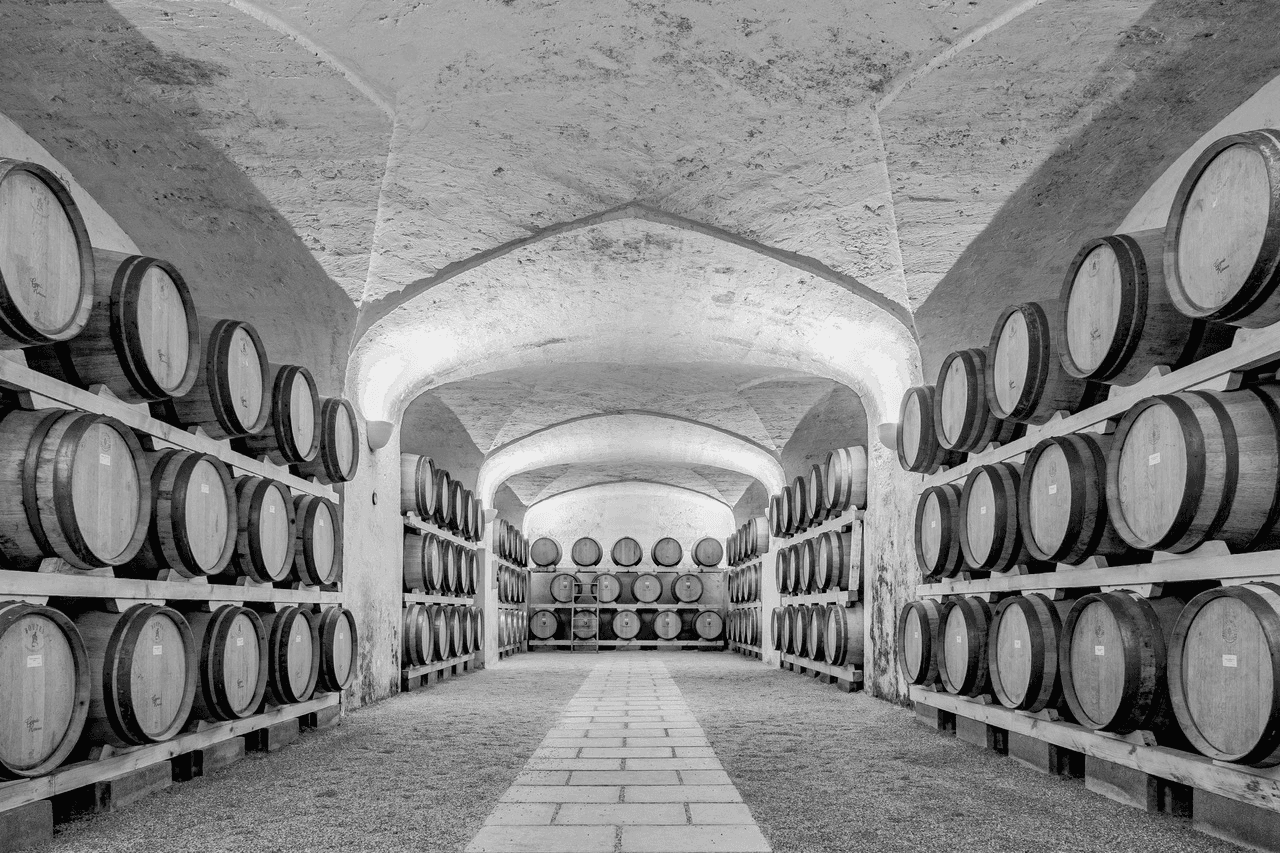
Monastrell, the grape that defines Murcia
Murcia's dominant red variety is Monastrell, known elsewhere as Mourvèdre or Mataro. In Murcia it is not a blending grape — it is the foundation. The region holds two DOP designations built almost entirely around it: Jumilla and Bullas. Jumilla sits at elevations between 400 and 800 metres above sea level, which slows ripening despite summer temperatures that regularly exceed 40°C. That altitude is the main reason Jumilla's Monastrell retains structure rather than collapsing into overripe fruit. Yecla, Murcia's third DOP, covers a high plateau averaging 700 metres, with calcareous soils that impose a mineral restraint on the same grape. Monastrell vines in Murcia are frequently old — many plots hold ungrafted vines from before the phylloxera wave reached this corner of Spain, because the region's dry, sandy soils were inhospitable to the louse. Vine age here is not marketing language. It is geology. Old-vine Monastrell from these soils produces lower yields and higher phenolic concentration than younger plantings, a difference measurable in the glass. Spanish red wines from Murcia sit apart from Tempranillo-led regions like Rioja precisely because the grape, the altitude, and the soil type are fundamentally different.
Climate, soil, and altitude across Murcia's three DOPs
Murcia is one of the driest wine regions in Europe. Average annual rainfall in Jumilla is under 300 millimetres — roughly a third of what Bordeaux receives. Vines survive through deep root systems and dry-farming practices that have been standard here for centuries, not by choice but by necessity. Irrigation is permitted in younger vineyards, but established old vines are dryland farmed by default. The soils across the three DOPs differ in ways that matter. Jumilla sits on limestone and clay over chalk subsoil. Bullas has a cooler microclimate than either Jumilla or Yecla, with more granite-influenced soils and elevations pushing toward 900 metres in the higher plots — a profile that produces lighter, more aromatic expressions of Monastrell than the fuller-bodied wines from lower Jumilla. Yecla's plateau soils are predominantly calcareous with a high sand content, which contributes to the region's historic freedom from phylloxera. Garnacha and Syrah appear as supporting varieties across all three appellations, but Monastrell accounts for the majority of plantings in each. Producers working at higher elevations within these DOPs tend to harvest 10 to 14 days later than those on the valley floor — a difference in timing that translates directly into acid retention and aging potential.
How Murcia producers work with Free Grape Society
Every wine listed on Free Grape Society is tasted before it goes live. Producers send samples to our Head of Product, who tastes each one before the listing is approved. Independent wine experts Rate & Review individual wines on the platform — their assessments appear on the wine page and on the expert's own profile, visible to anyone. The producer sets their own price. No buyer with quarterly volume targets decides what gets listed or at what margin. No importer adds a layer between the cellar and the customer. The price you see is the price the producer agreed to, and the bottle ships from their cellar, not from a redistribution warehouse. That structure matters for Murcia specifically because the region's producers have historically exported heavily to northern European markets through long intermediary chains, with limited direct-to-consumer reach. Spanish wines from Murcia are not common in specialist retail outside Spain. They reach you here through the producer's own logistics, which means fewer handling stages and a shorter window between bottling and delivery. For red wines from Spain with significant aging potential — Monastrell from old ungrafted vines being the clearest example — that chain length is not a trivial consideration.