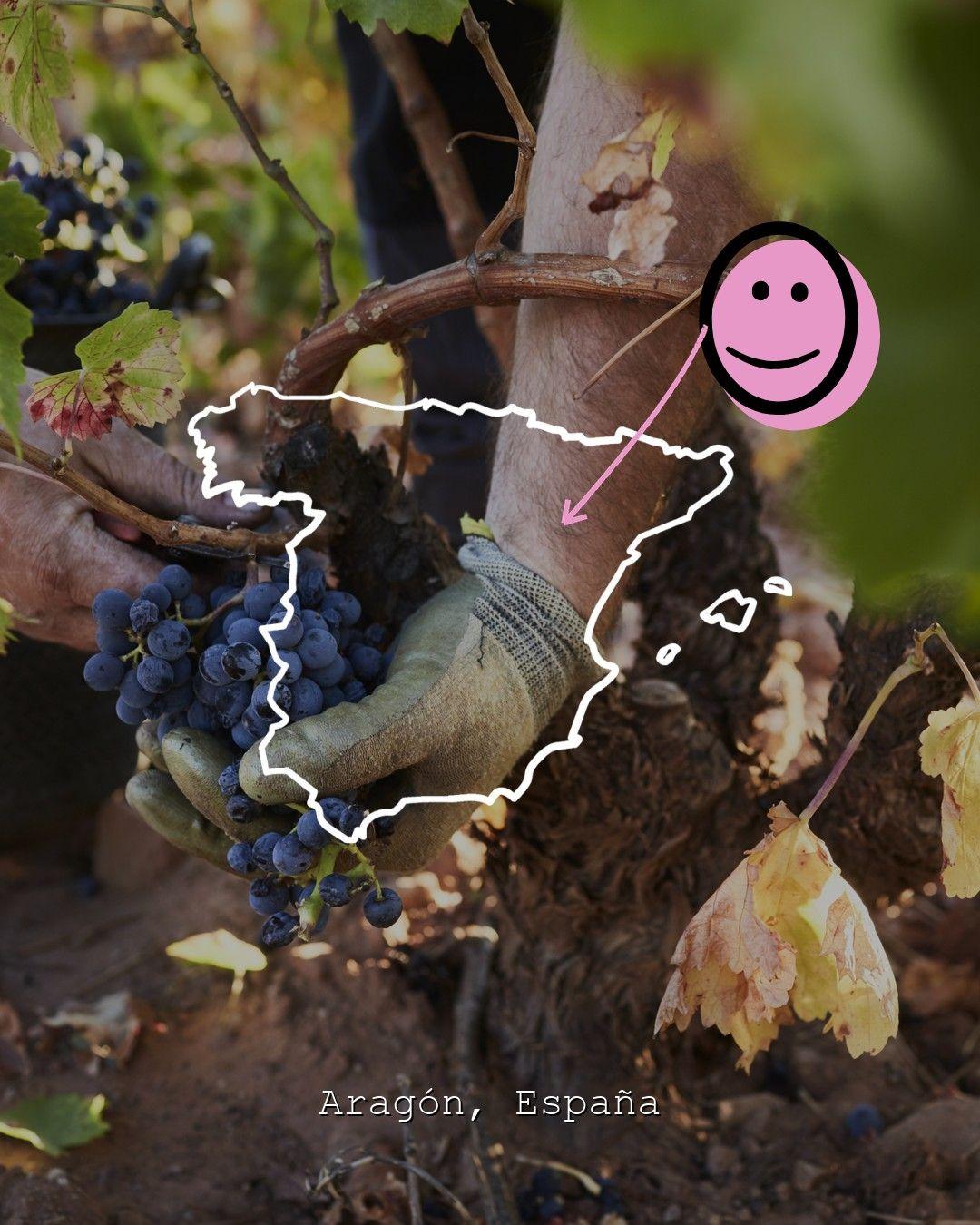
Aragón wineries
Aragón's producers are spread across four denominations — Campo de Borja, Calatayud, Cariñena and Somontano — each sitting at a different elevation and drawing on a different combination of continental heat and Pyrenean altitude. The grapes that dominate are Garnacha and Tempranillo, though Somontano in particular has built a reputation on international varieties planted in the cooler north. What connects the estates is a directness: small holdings, often family-run, farming vines that in some cases are well over fifty years old. On Free Grape Society, producers sell and ship directly from their own cellar, with no importer or warehouse in between.

No match yet!
It looks like we don't have a match for your selected criteria today. Try clearing or adjusting your filters. Or check back soon!
The producers of Aragón
Aragón sits in the northeast of Spain, stretching from the Pyrenees in the north down to the arid plateaux of the Ebro valley. The region's producers are mostly family operations, many of them farming the same parcels their grandparents planted, working in three DO zones that each reward a different style. In Cariñena, Garnacha and the grape that carries the zone's name — Cariñena, also called Mazuelo — grow on high-altitude, stony soils that force the vines to work for their water. In Calatayud, old-vine Garnacha on slate and limestone produces wines that punch well above the region's international profile. In Campo de Borja, on the slopes leading up toward Moncayo, the combination of altitude and continental heat gives Garnacha a freshness that surprises people expecting only density. Aragón's growers are not a uniform group: you will find producers committed to native varieties alongside those blending in Tempranillo or Syrah, and estates ranging from a few hectares to larger co-operative-rooted operations now run independently. What connects them is a regional confidence in growing conditions that much of Europe cannot match for value.
How we choose our producers
We work directly with the growers behind the wines, which means getting to know how they farm and what they charge before anything is listed. Producers send samples, and those samples are tasted before a wine is listed — the decision rests on what is in the glass rather than on a label or a regional reputation. We look for pricing that reflects the work in the vineyard without the mark-ups that importers and warehouses add, and we keep the relationship direct so the producer sets their own terms. Aragón offers strong conditions for this: land costs are lower than in Spain's more celebrated zones, so growers can price honestly and still invest in the vineyard. Once wines are listed, independent wine experts rate and review individual bottles, building a public record that buyers can read on the wine page. We do not try to carry the full output of the region: we list wines tasted before listing, from producers we have a direct relationship with. Free Grape Society is a society of producers, independent experts and wine lovers, not a shop, and that distinction shapes every listing decision.
Winemaking traditions in Aragón
Aragón's winemaking history runs through Garnacha more than any other grape. The variety found a natural home here on the dry, stony soils of the Ebro basin, where low rainfall and wide day-to-night temperature swings during the growing season concentrate flavour without stripping freshness. Old-vine Garnacha — vines of fifty years or more, often ungrafted — is one of the region's most reliable assets, and several producers in Calatayud and Campo de Borja have built their range almost entirely around it. Beyond red wines, the region has a quieter tradition in Garnacha Blanca, the white-berried mutation of the same variety, which produces full-bodied, textured whites with good ageing potential. Cariñena adds structure and acidity where Garnacha can run soft, and the two grapes appear together across many of the region's blends. If you want to trace how the same grape expresses itself across different soils and altitudes, Aragón's three DOs offer a compact and instructive comparison — or explore producers working similar soils elsewhere in Spain through Spanish wineries or wines from neighbouring Rioja and Castile and León.