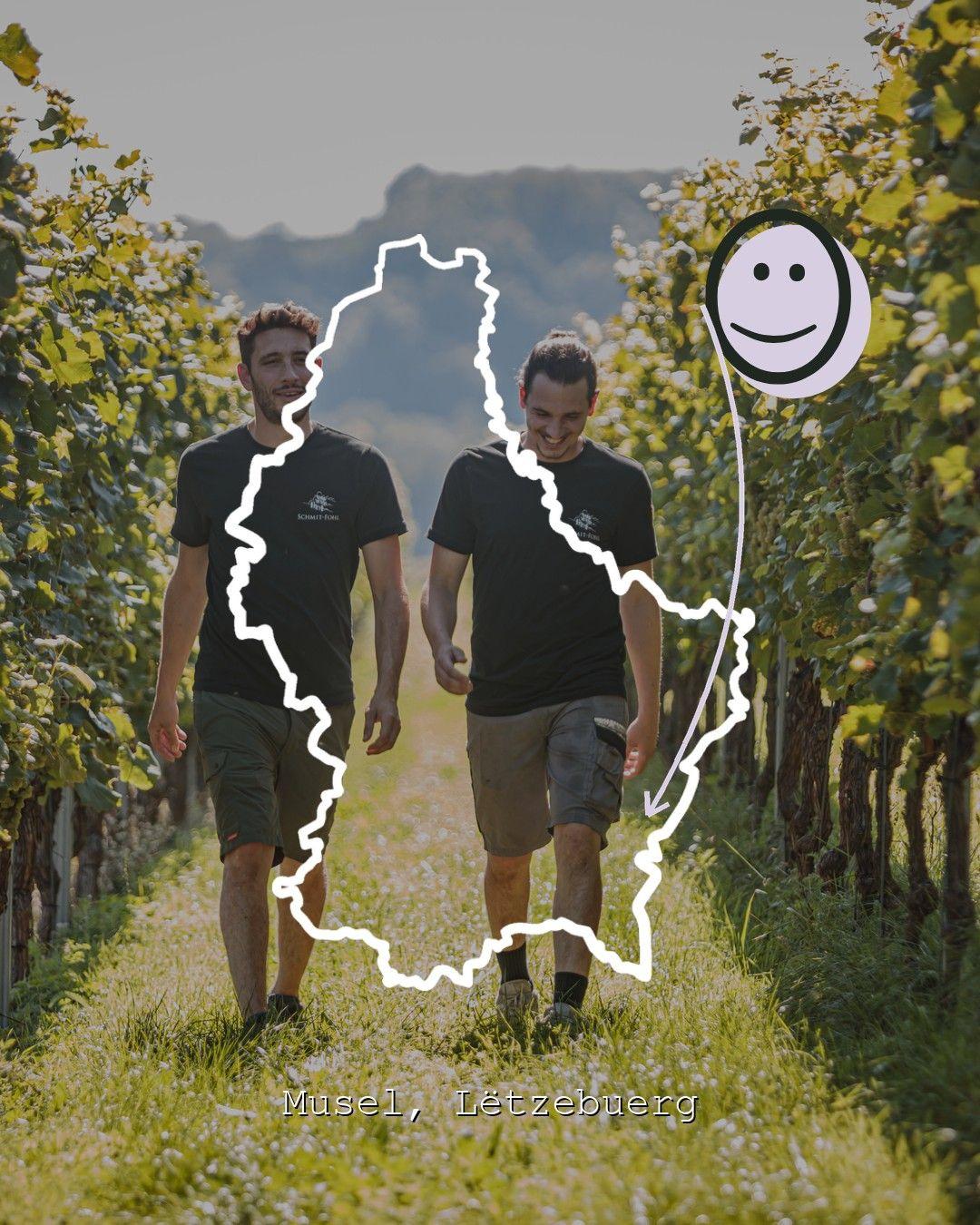
Moselle wineries
The Moselle's vineyards run along one of Europe's oldest wine rivers, shared between Luxembourg, Germany, and a sliver of France. The steepest terraces face south over the water, capturing enough sun to ripen grapes at this latitude, and the slate and limestone beneath hold warmth into the evening. Many of the estates here are small, often a single family farming a handful of parcels by hand. On Free Grape Society, producers sell and ship directly from their own cellar, with no importer or warehouse in between.

No match yet!
It looks like we don't have a match for your selected criteria today. Try clearing or adjusting your filters. Or check back soon!
The producers of the Moselle
The Moselle is one of Europe's most northerly wine regions, and the producers working here have adapted to that fact over centuries. The river's tight loops create steep south-facing slopes where the vines catch as much sun as possible, and the slate soils absorb heat during the day and release it at night, extending the growing season into autumn. Most estates here are small family holdings, often farming terraced vineyards that cannot be worked by machine. That combination of difficult terrain and long-established family ownership means the growers tend to know their parcels intimately, and the wines reflect it. Luxembourg's Moselle runs along the country's eastern border with Germany, sharing the river but developing its own distinct character, with Rivaner and Auxerrois alongside Riesling as the grapes most commonly planted. You can browse wineries in Luxembourg or go directly to Moselle producers to see who is listed.
How we choose our producers
We work directly with the growers behind the wines, which means getting to know how they farm and what they charge before a single bottle is listed. Producers send samples, and those samples are tasted before a wine is listed, so the decision rests on what is in the glass rather than on a label or a reputation. We look for pricing that reflects the work in the vineyard and the cellar without the mark-ups that importers and warehouses add, and we keep the relationship direct so the grower sets their own terms. Once a wine is listed, independent wine experts rate and review individual bottles, building a public track record that buyers can read on the wine page. On Free Grape Society, producers sell and ship directly from their own cellar, with no importer or warehouse in between, so the grower remains the point of contact for what they make. We do not try to carry the full output of a region: we list wines tasted before listing, from producers we have a direct working relationship with.
Winemaking traditions in the Moselle
Riesling has been the Moselle's signature grape for well over a century, valued here precisely because the cool climate slows ripening and builds acidity alongside whatever sugar the long season develops. The result is a spectrum that runs from bone-dry to late-harvest styles, with the grape's tension between acidity and fruit defining the region's identity more than any single style does. On the Luxembourg stretch of the river, Crémant de Luxembourg has grown steadily in importance alongside still whites, with the region producing sparkling wines under its own appellation using traditional method. Pinot Gris and Pinot Blanc add breadth to the range, and a small amount of red is made from Pinot Noir, though the cool conditions mean white and sparkling wines dominate. If you want to explore what the Moselle's neighbours produce, wines from Germany and wines from France are both listed, alongside Riesling wines drawn from producers across the countries where the grape is grown. For producers working in other nearby regions, wineries in Germany and wineries in France are both on the site. Those interested in the Moselle's sparkling output can also look at Crémant de Luxembourg wines specifically.