How we choose our Georgian producers
Producers come to Free Grape Society in two ways: growers we approach and growers who approach us. Either way, the process is the same. A producer sends samples, and those wines are tasted before any of them is listed, so nothing reaches the catalogue on reputation alone. We look at how a producer works as much as what they make: whether they farm their own fruit, how they treat their land, and whether their prices are fair to both the grower and the buyer. Wines that are listed are then open to review by independent wine experts, who rate and comment on bottles they have personally tasted, and those reviews sit on the wine pages for anyone to read. We do not list a producer's full range as a matter of course, and we do not chase the biggest names. The aim is a working relationship with growers whose wine and whose practices we can stand behind. You can read how reviews work on the wine experts page.
The producers behind Georgian wine
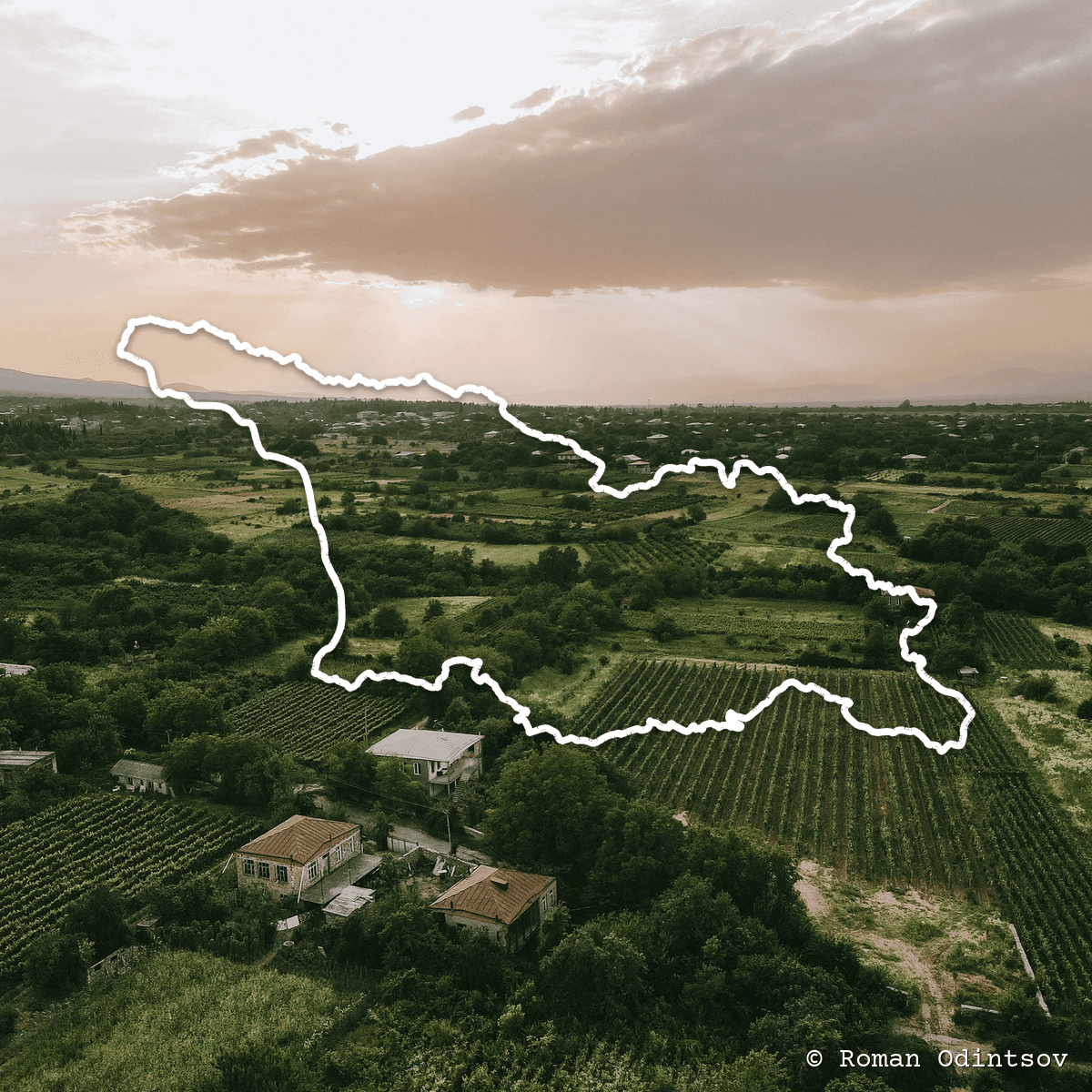
Georgia's wine producers are concentrated in the east of the country, where the Alazani River valley and its surrounding hills form the backbone of Kakheti — the region responsible for the majority of Georgian wine. Most estates here are small, family-run operations that have farmed the same land for generations, growing indigenous varieties like Rkatsiteli, Mtsvane, and Saperavi on a scale where every decision about when to pick and how long to age is made by the people who own the vines. Beyond Kakheti, producers in Kartli and Imereti work with different soils and a cooler climate, producing wines that tend toward lighter structure. You can explore the growers working in Kakheti or browse the full list of Georgian wineries to find a producer whose approach suits you.
Buying direct from a Georgian grower
When you buy from a Georgian producer on Free Grape Society, the wine ships directly from that producer's own cellar, with no importer, agent, or warehouse in between. For Georgian wine, that directness matters more than it might for a large established region: many of these producers have limited distribution outside their home country, and the wines you find here are not the same as what reaches a supermarket shelf in Western Europe — if they reach one at all. Buying direct also means the producer sets their own price, which tends to reflect the actual cost of making wine on a small estate rather than a margin built up through several layers of trade. Georgia's winemaking tradition is one of the oldest documented anywhere, built around the qvevri — a clay vessel buried underground, used for fermentation and ageing — and that tradition is very much alive in the cellars listed here. If you want to explore further, the all wineries page shows producers from across Europe working in a similar direct-trade model.