
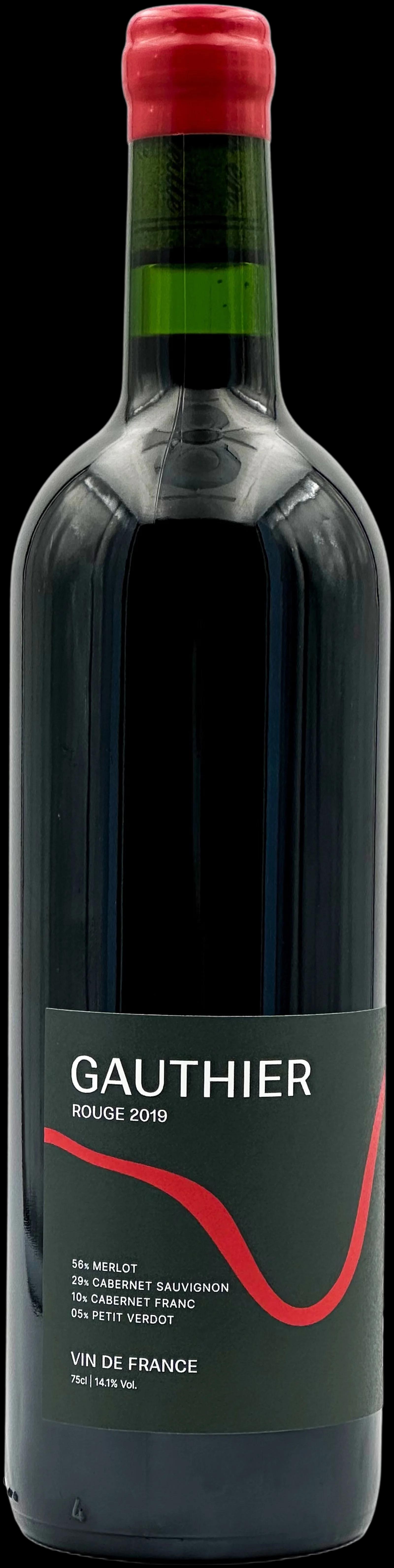
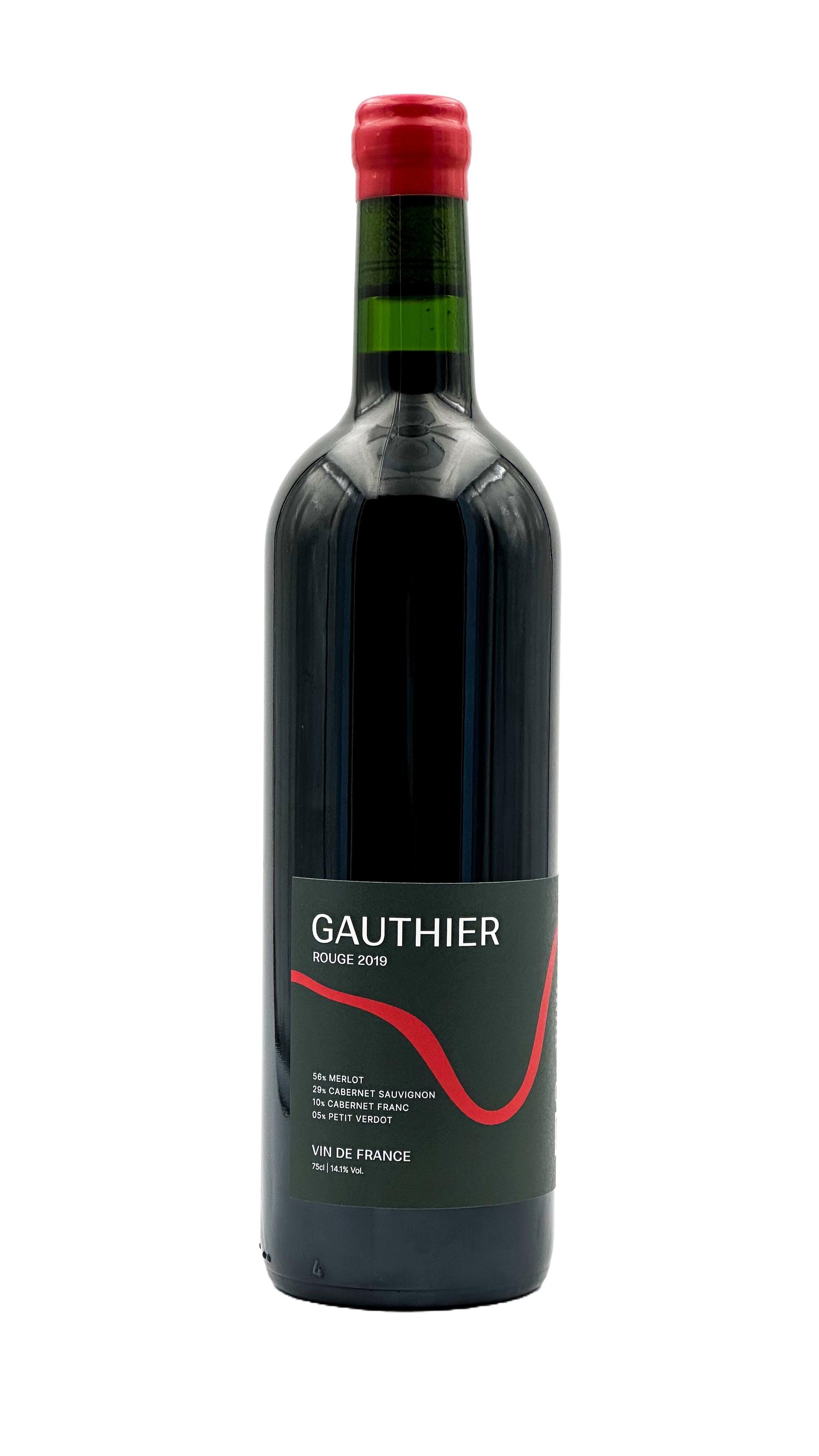
Gauthier 2019
Gauthier 2019
Price incl. alcohol tax, shipping and VAT.

Winemaker's notes
Your package will arrive at your doorstep within4 - 16 days

Chateau d'Esther will receive and pack your order (1 - 4 days)
The courier will pick up your order and deliver it straight to your door
Product details
About the wine and its characterCountry:
France
Region/Subregion:
Bordeaux/Entre-deux-Mers
Classification:
VdF
Certification:
Organic
Grape:
Petit Verdot (5%)
Cabernet Franc (10%)
Cabernet Sauvignon (29%)
Merlot (56%)
Vintage year:
2019
Color:
Medium ruby
Aroma:
Leather with some warm spices from long aging in older oak barrels followed by dark berries and cherries.
Taste:
Ripe dark fruits like Plum, dark cherry with fresh acidity and a fine tannin that subtly supports the medium structure of this wine.
Alcohol content:
14.1%
Sugar content:
-
Acidity:
-
pH-value:
-
Sweetness:
Dry
Contains sulphite:
Yes
Volume:
750 ml
Closure:
Natural cork
Bottle:
Glass
Best Served:
-
Food pairing:
Beef, Charcuterie, Cheese - goat cheese, Cheese - mature and hard, Cheese - mild and soft, Lamb, Pork, Poultry
Ageing potential:
5 - 10 years
Food pairings by the winemaker
- Beef
- Charcuterie
- Cheese - goat cheese
- Cheese - mature and hard
- Cheese - mild and soft
- Lamb
- Pork
- Poultry
Vinification, winemaker's own words
Soils:
Clay, Sand
Terroir:
Clay and schist soils, proximity to Dordogne river, age of vines - 35 years (average), density of plantation 2 meter spacing, 1.4 m row width.
Harvest:
Picked by hand
Fermentation:
Steel (100%)
Storage:
New oak (30%) 18 months
Old oak (70%) 18 months
Winemaker:
Ian Hocking
Wine is fermented spontaneously by indigenous yeasts and produced with minimal intervention.
About Chateau d'Esther
Information provided directly by the winery.

Information
Château d’Esther is located just outside Bordeaux, in Saint-Loubès, and with its modest six hectares, it is truly a rare gem. Winemaker have created a genuine biotope here. The cultivation of vines and wine production are part of a closed-loop system and an interaction between nature and humans. Fruit trees are planted between the vine rows to enrich the soil and attract animals that naturally protect the vines. This, in turn, brings even more biodiversity, allowing the natural cycle to thrive. Thanks to this unique approach, winery is able to completely avoid the use of pesticides.