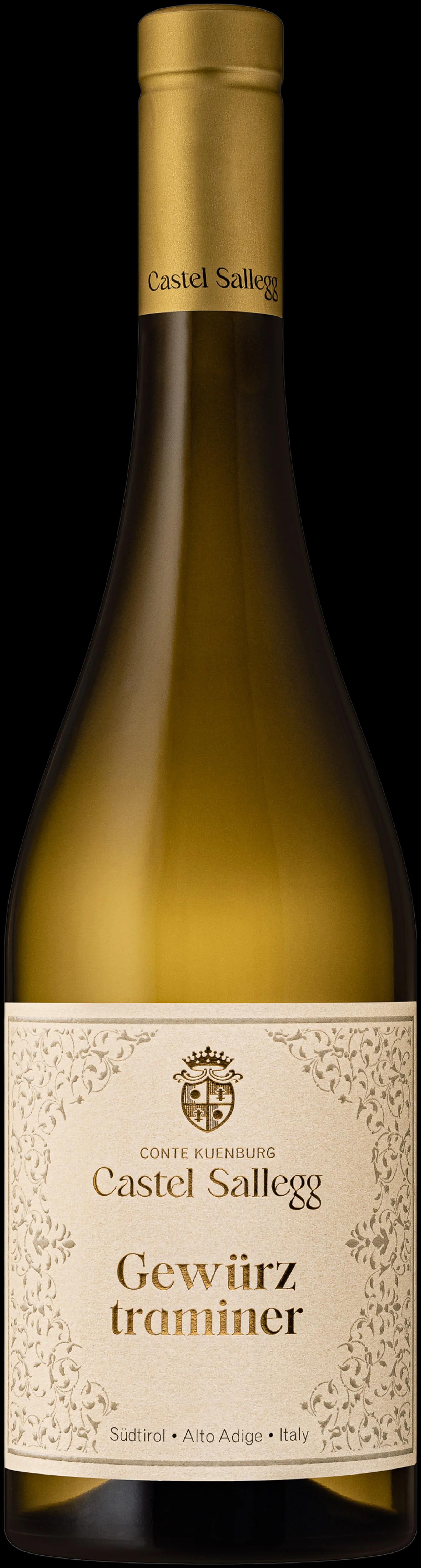
Gewürztraminer: aromatic, spicy and unmistakable from vine to glass

Gewürztraminer wine is one of the easiest grapes to recognise: intensely aromatic, with rose petal, lychee and baking spice in styles ranging from bone dry to richly sweet. The producers below grow it across Alsace, northern Italy, Germany and Austria.

From its Alsace heartland to Alto Adige and beyond, one of wine's most distinctive whites.

Color

Dropdown arrow

Type

Dropdown arrow

Country

Dropdown arrow

Region

Dropdown arrow

Grape

Dropdown arrow

Pairing

Dropdown arrow

Sort by

Sort arrow
Gewürztraminer

Gewürztraminer wines

Gewürztraminer is one of the few grapes that announces itself before you even raise the glass. Its hallmark aromatics — rose, lychee, ginger, sometimes a whisper of smoke — come from a high concentration of terpenes in the skin, and they are present whether the wine is dry, off-dry or late-harvest sweet. Alsace, in northeastern France, is its most celebrated home, but the grape also produces serious wines in Alto Adige, the Pfalz and Austria. On Free Grape Society, each bottle is shipped directly from the grower's own cellar, with no importer or warehouse in between.

Previous1 of 1Next

Gewürztraminer wine cases

A Gewürztraminer wine case gives you a producer's own selection of six bottles, put together as the recommendation they would make if you came to the cellar. For an aromatic grape with this much stylistic range — from austere and mineral to lush and honeyed — that context makes a real difference. You are tasting one estate's interpretation from multiple angles at once. Free Grape Society is a society of producers, independent experts and wine lovers, not a shop.

View all mixboxes

Wineries

The growers in this section all work with Gewürztraminer, but their wines sit at very different points on the spectrum. Some are in Alsace, where the grape has been cultivated for centuries and where the most structured, age-worthy examples are made. Others are in Alto Adige, Germany or Austria, where cooler sites tend to produce a more restrained, food-friendly style. The wine-advice service is there if you want to talk through the differences before choosing.

View all wineries

Wine experts

Gewürztraminer divides tasters — some find the aromatics irresistible, others want more restraint — which is exactly the kind of question an independent perspective helps settle. Wine experts on Free Grape Society review wines they have personally tasted, and their notes appear on each wine page and on the expert's own profile. Several of the experts below have reviewed Gewürztraminer wines featured on this page, so you can read what they found before deciding.

View all wine experts

Frequently asked questions

How do I order Gewürztraminer wine on Free Grape Society?

Browse the wines on this page, add bottles to your basket and check out. Each bottle ships directly from the producer's cellar to your door. Orders include free shipping, and delivery typically takes between four and fourteen days from dispatch.

What happens if a bottle arrives broken or doesn't taste right?

Send a photo to Free Grape Society customer support within 7 days of delivery. We will arrange a replacement or a refund. Because producers ship directly, quality issues are handled with the producer's direct involvement. Shared responsibility is built into how FGS works.

Can I order Gewürztraminer from more than one producer in a single order?

Yes. You can add wines from different producers to the same basket and check out in one transaction. Each producer dispatches their bottles separately from their own cellar, so you may receive more than one delivery if your order spans multiple growers.

How long does delivery take?

Average delivery is 8 to 9 days from order to door. The full range is 4 to 14 days depending on the producer's location and your delivery address. Wines ship directly from the producer's cellar, not from a central warehouse.

How do I choose between dry and sweeter styles of Gewürztraminer?

Alsace producers often make both dry and late-harvest versions — the label will usually indicate Vendanges Tardives for off-dry or sweet styles. Italian and German Gewürztraminer tends to sit in a drier, lighter register. Reading the producer's own notes on the wine page is the quickest way to understand where a particular bottle sits on the spectrum.

How does the selection of Gewürztraminer producers work on Free Grape Society?

Producers apply to join and wines are tasted before listing. The growers who work with Gewürztraminer come from several regions — mainly Alsace, Alto Adige, the Pfalz and Austria — so the page gives you a cross-section of how the grape behaves in different soils and climates, all from estates that bottle their own wine.

Which Gewürztraminer wine expert can recommend something for me?

Several independent wine experts on Free Grape Society have reviewed Gewürztraminer wines and can point you toward the right bottle for your palate or occasion. Browse the experts section on this page to see their profiles and recent reviews, or use the wine-advice service to ask a specific question.

Why don't you sell supermarket-brand Gewürztraminer wines?

Free Grape Society works exclusively with independent producers who grow the grapes and bottle the wine themselves. Supermarket-brand Gewürztraminer is typically sourced from large négociants or blended across many growers, with no single estate behind it. The estates on this page are responsible for every decision from the vineyard to the label.

Can I find Gewürztraminer wines that I wouldn't see in a normal wine shop?

Most of the producers on this page sell direct and do not distribute widely through retail channels. Without an importer or agent in the chain, small-production Gewürztraminer from individual estates rarely reaches standard wine shops. Free Grape Society removes that layer, so the wines here are available to buy directly from the grower.

Where Gewurztraminer comes from and how region shapes it

Gewurztraminer's spiritual home is Alsace, where it produces some of the most distinctive white wines in France: deeply coloured, richly aromatic, and built to age. The name comes from the village of Tramin in northern Italy's Trentino-South Tyrol, where the grape has grown for centuries under the name Traminer, and the two are related though not identical in character. From there it spread north through Germany, Austria, and the Pfalz, and east into the Czech region of Moravia and the Moselle valley in Luxembourg. Climate has a pronounced effect on how it tastes: in cooler sites it keeps more acidity and a drier finish; in warmer years the wines become fuller and tip toward off-dry or sweet. Alsace producers working the Haut-Rhin slopes tend to produce the most structured expressions, while German Gewurztraminer wines and Austrian whites often sit in a slightly lighter register. For the grape grown closer to its Italian origin, the Trentino-South Tyrol wineries are a useful reference point.

How Gewurztraminer tastes, and what to drink it with

Few grapes announce themselves as clearly as Gewurztraminer. The aromatics are the first thing most people notice: lychee, rose petal, ginger, and a faint smokiness that is almost impossible to confuse with anything else. On the palate the wines are typically full-bodied with relatively low acidity for a white grape, which gives them a generous, almost oily texture. Tannin is not a factor. The flavour profile makes food pairing more straightforward than the intensity might suggest: the grape's natural spice cuts through rich and aromatic cuisines, which is why it sits particularly well alongside Alsatian dishes, strongly spiced food, and soft washed-rind cheeses. Off-dry versions work with spiced pork dishes and blue cheese; dry versions pair well with Thai, Moroccan, and Indian-influenced cooking. The grape also produces excellent late-harvest wines in years with botrytis, where the residual sugar and natural aromatics build on each other. Producers in Alsace and Friuli Venezia Giulia each bring a distinct take on that richer style.

Buying Gewurztraminer wine direct from independent producers

Gewurztraminer is grown across a wider range of European countries than its Alsatian reputation suggests. On Free Grape Society you will find it from producers in France, Germany, Austria, Italy, Luxembourg, and the Czech Republic, among others. The producers here sell and ship directly from their own cellars, with no importer, agent, or warehouse in the chain between the grower and your door. That means the bottle arrives as the producer packed it, and the price reflects what the estate actually charges rather than what a distributor adds. If you want to compare how the same grape changes across climates, the Alsace wines page and the Pfalz wines page sit at opposite ends of the stylistic range and are a good place to start. Free Grape Society is a society of producers, independent experts, and wine lovers, not a shop — and wines are tasted before listing, so the quality bar is set before anything reaches the catalogue.