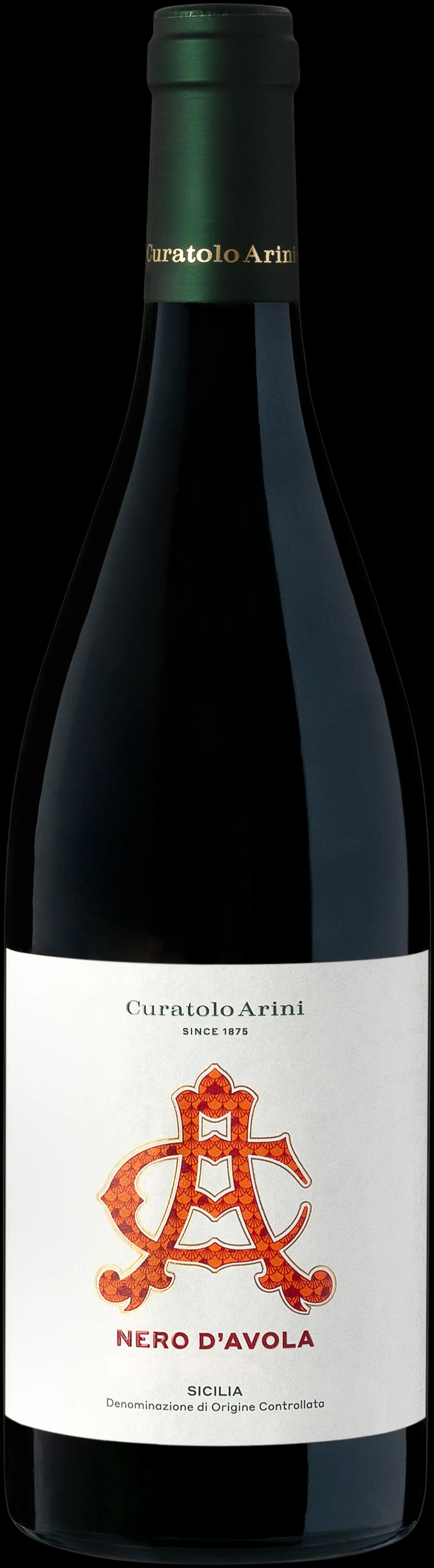
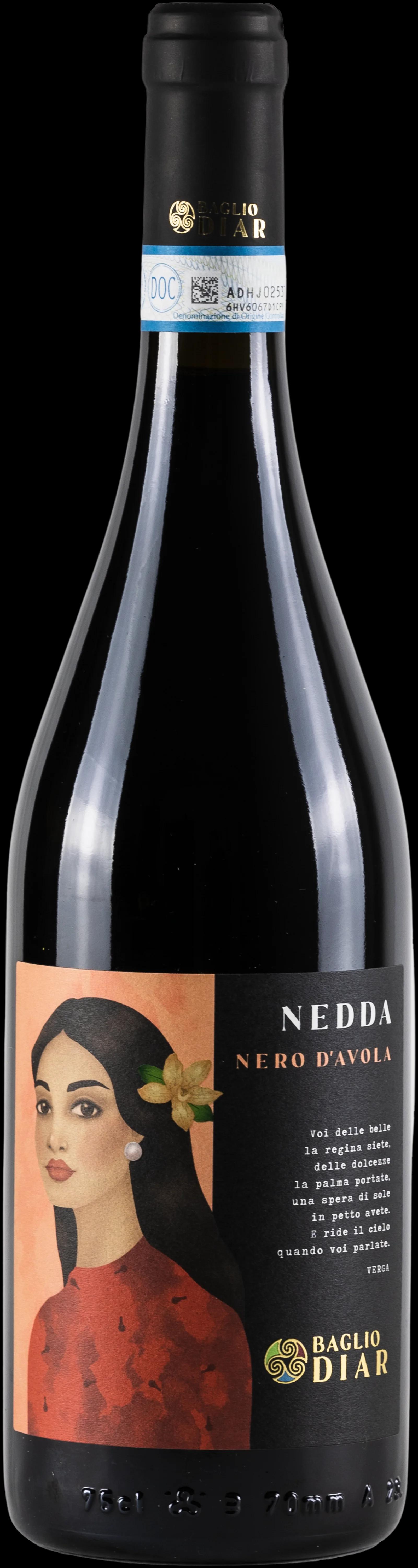
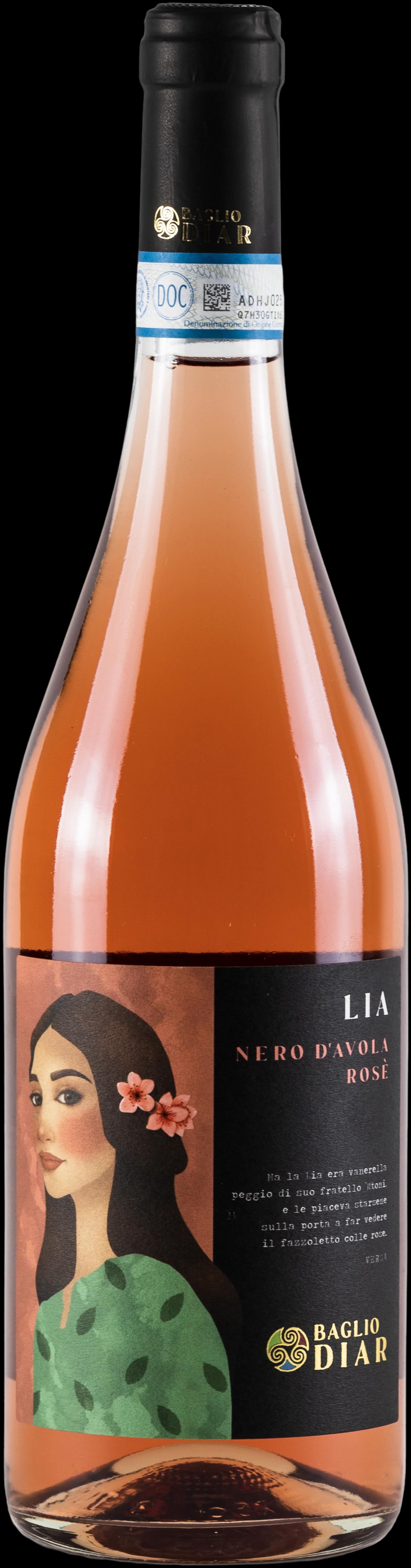
Nero d'Avola in Sicily — what the soil and climate actually do
Nero d'Avola is one of the few red grapes in the world that developed in conditions extreme enough to make most varieties unviable. The southeastern corner of Sicily — particularly the area around Noto and Pachino — sits at a latitude where summer temperatures regularly exceed 35°C and rainfall during the growing season is minimal. The grape adapted to this by developing unusually thick skins, which accounts for both its deep pigmentation and its high tannin content. On calcareous clay soils, the result is a wine with substantial structure and dark fruit character. On sandier soils closer to the coast, the same grape produces something rounder and less tannic — same variety, measurably different wine. Altitude also matters: producers farming at 400–600 metres in the interior of Sicily work with lower night temperatures that preserve acidity, resulting in wines with more definition than those grown on the coastal plains. Nero d'Avola planted above 500 metres ripens 2–3 weeks later than the same variety at sea level — a difference that shows clearly in the final structure.
How Italian Nero d'Avola compares to other southern Italian reds
Nero d'Avola is often grouped with other southern Italian red wines — Primitivo, Negroamaro, Aglianico — but the comparison is less straightforward than the geography suggests. Primitivo and Negroamaro are Apulian varieties; Aglianico is Campanian. Nero d'Avola is Sicilian and, unlike those varieties, it is almost entirely confined to the island. It has no significant presence in mainland Italy. Structurally, Nero d'Avola sits between the dense heat-driven weight of Primitivo and the leaner acid-driven profile of Aglianico. At its best — single-estate, lower-yield farming, no over-extraction — it produces wines with 13.5–15% alcohol, firm tannins, and enough acidity to age. Many producers in Sicily now vinify it without extended maceration to avoid the jammy profile that defined the export style in the 1990s and early 2000s. The shift toward earlier picking and shorter skin contact has produced a generation of Nero d'Avola wines that are structurally more precise than earlier iterations of the variety. Producers on Free Grape Society working with this grape tend to be single-estate operations — no blending across appellations, no industrial volume. No importer, no wholesaler. The price you see is the price the producer agreed to.
Styles of Nero d'Avola from Italy — and what drives the variation
Nero d'Avola is not a single style. Three main production variables determine what ends up in the bottle. First, winemaking approach: extended maceration and new oak aging produces the fuller, more tannic, internationally legible style — higher extraction, darker colour, longer finish. Minimal intervention, concrete or large old wood, shorter skin contact produces something more transparent and site-specific. Second, blend versus varietal: some Sicilian producers blend Nero d'Avola with Nerello Mascalese or Syrah to moderate tannin or add aromatic complexity. Varietal bottlings show the grape unmediated. Third, appellation: the DOC Eloro (Pachino subzone) represents the most geographically specific expression of Nero d'Avola — the Pachino peninsula has some of the oldest vine material on the island and a distinct microclimate shaped by proximity to the sea. Outside appellation boundaries, the category is broader. Italian wines from Sicily span all three of these production approaches, and the price range reflects that variation as much as quality level. For context on how Sicily fits within Italian red wine geography, the Italy page and the Sangiovese page offer adjacent reference points on how different Italian regions define red wine style. The Nebbiolo page covers the northern Italian structural counterpoint to what Nero d'Avola does in the south.