Alentejo and its grapes
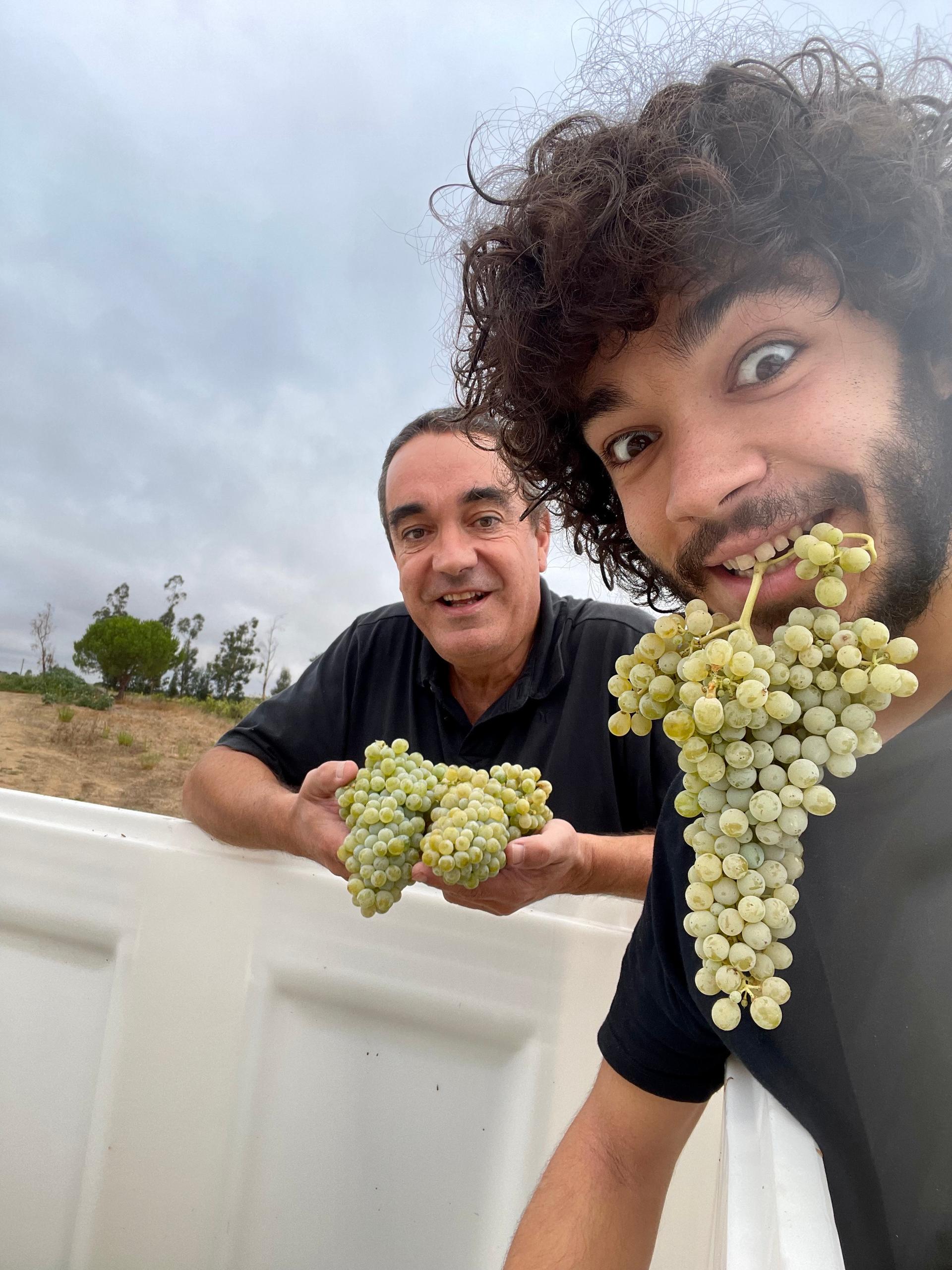
Alentejo stretches across a wide, sun-baked plateau in southern Portugal, and the heat shapes everything about how the wines taste. The region's signature red grape is Aragonez — the local name for Tempranillo — often blended with Trincadeira, a variety that brings deep colour and spice, and Alicante Bouschet, which is unusual among red grapes in having red flesh as well as red skin. Together they produce reds that tend to be full and round, with the warmth of the climate softening tannins into something approachable even when young. For whites, Antão Vaz is the grape to know: it performs well in heat and produces wines with weight and texture, often with a faint floral character. Arinto, more commonly associated with Vinho Verde to the north, also appears in Alentejo blends, adding freshness and acidity to counter the region's warmth. The result is a white wine style that is richer than many Portuguese whites but still retains enough lift to sit well with food.
How Alentejo is organised
Within the broader Alentejo designation there are eight subregions, each corresponding roughly to a county or municipality: Portalegre in the north, where the Serra de São Mamede mountains bring cooler temperatures and more mineral-driven wines; Borba, Redondo, Reguengos de Monsaraz and Évora across the central plateau; and Moura, Granja-Amareleja and Vidigueira to the south. Wines labelled simply Alentejo can draw on grapes grown anywhere across this area, while wines labelled with a subregion name must meet stricter geographic rules. Portalegre tends to produce the most distinctive wines stylistically — the altitude moderates temperatures enough that the reds have more structure and the whites more freshness than elsewhere in the region. Reguengos de Monsaraz, by contrast, sits at lower elevation and produces the broad, ripe style most closely associated with Alentejo's international reputation. Knowing which subregion a wine comes from tells you something about what to expect in the glass before you read the back label. Browse wines from Portugal to explore how Alentejo sits alongside the country's other regions.
Buying Alentejo wine from independent producers
Most of the Alentejo wines that reach northern European markets travel through importers and distributors, which means the producer's margin is shared across several hands before the bottle reaches a buyer. Working directly with a grower removes that chain. On Free Grape Society, producers in Alentejo ship directly from their own cellar, so the price reflects the estate rather than the distribution route. Wines are tasted before listing, and independent wine experts rate and review individual bottles, building a track record that sits on each wine's page. If you are exploring Portuguese wine more broadly, wines from Portugal covers producers across the country's main regions, and red wines and white wines let you filter by style across all the countries Free Grape Society works with. Free Grape Society is a society of producers, independent experts and wine lovers — not a shop — and the Alentejo producers listed here sell on their own terms, at prices they set themselves.