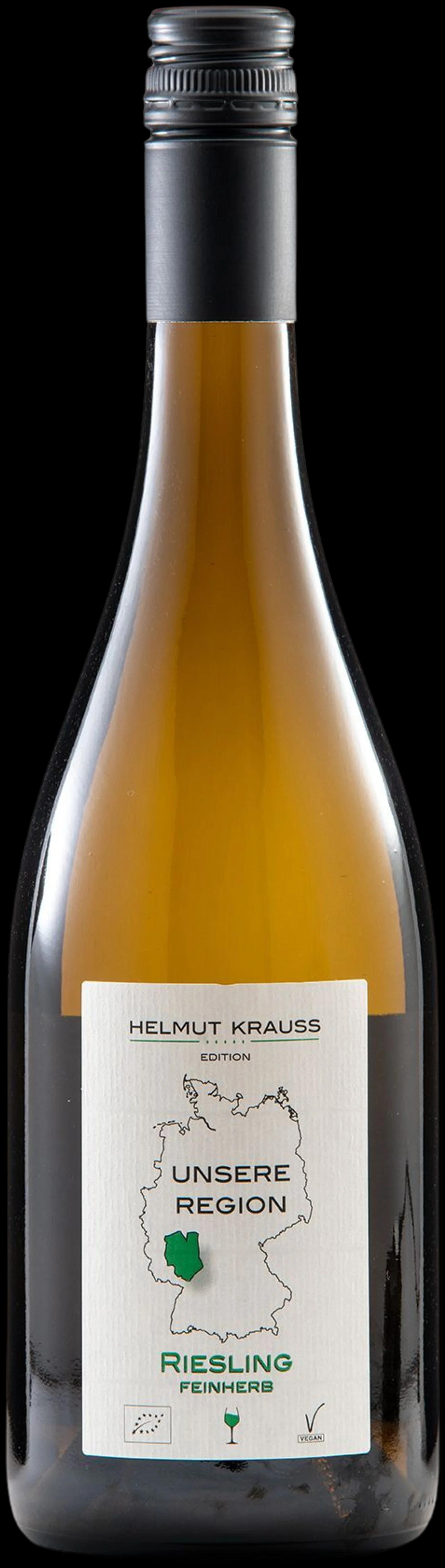
Riesling from Germany — structure built in the vineyard

German Riesling from independent estates. Every wine tasted before listing. Shipped directly from the cellar.

From Mosel slate to Pfalz loam, one grape, many soils.

Color

Dropdown arrow

Type

Dropdown arrow

Country (1)

Dropdown arrow

Region

Dropdown arrow

Grape (1)

Dropdown arrow

Pairing

Dropdown arrow

Sort by

Sort arrow
Germany
Riesling

German Riesling

German Riesling is not one wine. In the Mosel, steep blue-slate slopes slow ripening and produce high-acid wines that often sit below 9% ABV — a direct result of the slate absorbing heat during the day and releasing it at night. In the Rheingau, flatter terrain and more loess and clay push the grape toward fuller body and lower aromatic intensity. In Pfalz, warmer temperatures and deeper soils produce riper, rounder styles with more residual sugar in classic expressions. The grape is the same. The geological context is not.

Previous1 of 1Next

Frequently asked questions

How do I order German Riesling on Free Grape Society?

Browse the wines listed on this page and add bottles to your cart. Each listing shows the producer, region, and vintage. You pay once at checkout. Wines ship directly from the producer's cellar in Germany to your door. No account is required to browse.

What happens if a bottle arrives broken or doesn't taste right?

Send a photo to Free Grape Society customer support within 7 days of delivery. We will arrange a replacement or a refund. Because producers ship directly, quality issues are handled with the producer's direct involvement. Shared responsibility is built into how FGS works.

Can I order a single bottle of German Riesling or do I need to buy a case?

Single bottles are available. There is no minimum case requirement on Free Grape Society. You can order one bottle or several from different producers in the same checkout. Each producer ships their wines separately, so multiple deliveries may arrive from one order.

How long does delivery take?

Average delivery is 8 to 9 days from order to door. The full range is 4 to 14 days depending on the producer's location and your delivery address. Wines ship directly from the producer's cellar, not from a central warehouse.

How do I find the right German Riesling style for me — dry, off-dry, or sweet?

German Riesling is labelled by ripeness category: Kabinett and Spätlese are typically lighter and may carry residual sugar. Auslese and above are noticeably sweet. Trocken on the label means dry. Filter by style or read the producer's tasting notes on each listing. Independent wine experts on Free Grape Society also review individual wines with style notes.

What is the difference between Mosel Riesling and Rheingau Riesling?

Mosel Riesling grows on steep slate slopes. The slate reflects sunlight and retains heat, allowing grapes to ripen despite the cool climate. Wines are typically lighter, higher in acid, and more delicate. Rheingau Riesling grows on flatter sites with more loess soil, producing fuller-bodied wines with a wider range of dry expressions. The same variety, structurally different results.

Which wine expert on Free Grape Society can recommend a German Riesling for me?

Several independent wine experts on Free Grape Society have reviewed German Riesling wines. Browse the expert profiles on the platform to find one whose speciality and style preferences align with yours. You can message any expert directly to ask for a recommendation.

Why don't you carry German Riesling from every producer in Germany?

Every wine on Free Grape Society is tasted before listing. Producers who list here have chosen to participate directly — no one is signed by a buyer with a volume target. That means the selection is limited to producers who have passed the quality review and want to sell on their own terms. Not every producer in Germany qualifies or applies.

Can I find German Riesling on Free Grape Society that is not available in regular retail?

Most German Riesling on Free Grape Society comes from small single-estate producers who do not distribute through conventional retail chains. These are not the wines your supermarket carries. They are the wines your supermarket cannot carry — volumes too small, margins too thin for a three-tier distribution model.

Riesling in Germany: soil, slope, and regional variation

Riesling grown in Germany is not a single style. It is the product of geology and altitude varying dramatically across a few hundred kilometers. In the Mosel, Riesling is planted on near-vertical slate slopes above the river. The slate absorbs heat during the day and releases it overnight, slowing ripening and preserving acidity. Alcohol levels in Mosel Riesling often sit between 8% and 10%, unusually low for a white wine and a direct consequence of the slope angle and soil composition. In the Rheingau, south-facing slopes above the Rhine give more sun exposure and heavier loam soils. The result is fuller body, richer texture, and a mineral profile that reads differently from Mosel slate. Pfalz sits further south, where a low mountain range blocks cold Atlantic air. Riesling here ripens more completely, producing rounder, sometimes off-dry styles with noticeably higher residual sugar in certain producer interpretations. Baden pushes the grape into its warmest German expression, bordering Alsace, where volcanic and loess soils shift the profile toward broader structure. Understanding which region a German Riesling comes from tells you more about what is in the glass than any back-label descriptor.

How German Riesling compares to the same grape grown elsewhere

Riesling is grown in Austria, Alsace, Australia, and New York, but its German expression remains structurally distinct. The key difference is the interaction between high acidity and low alcohol, a combination almost no other major Riesling region consistently achieves. Austrian Riesling, particularly from the Wachau and Kamptal, tends toward more body and extraction. Alsatian Riesling, grown just across the Rhine from Baden, typically reaches higher alcohol levels and more textural weight due to the drier, warmer conditions of the Alsace rain shadow. Australian Riesling from Clare and Eden Valleys is bone dry with pronounced lime character, but the acid structure comes from a completely different climatic mechanism than German slate-driven precision. What German producers working with Riesling consistently demonstrate is that the grape's aging potential is tied directly to acid preservation in cool conditions. A Mosel Kabinett from a single-estate producer can develop over 15 to 20 years in bottle, with the acidity shifting from sharp to complex without losing structural integrity. That long-term arc is the feature most clearly absent in warmer-climate Riesling. Producers on Free Grape Society listing German wines typically work with estate-grown fruit, meaning the soil composition per parcel is consistent vintage to vintage, which matters for that acid structure.

Styles of Riesling from Germany: dry, off-dry, and the Prädikat system

German Riesling is categorized under the Prädikat system based on the ripeness level of the harvested grapes, measured in degrees Oechsle. Kabinett is harvested at the lowest ripeness level and produces the lightest wines, typically 7–10% ABV. Spätlese, meaning late harvest, comes from grapes left longer on the vine, producing more concentration but not necessarily more sweetness. Auslese is harvested from selected bunches and sits at the boundary between dry-style and noticeably sweet. Further up the scale, Beerenauslese and Trockenbeerenauslese are botrytis-affected and function as dessert wines. A separate dry designation, Trocken, indicates residual sugar below 9 grams per liter and applies across all Prädikat levels. The distinction matters because a Spätlese Trocken and a Spätlese with residual sugar will taste categorically different despite identical grape ripeness at harvest. Single-estate producers making Riesling in Germany frequently specialize in one or two Prädikat levels where their site performs best, rather than producing across the full spectrum. For context, white wines from Germany broadly are dominated by Riesling at the quality end, but the grape accounts for around 23% of total German vineyard area, with Müller-Thurgau and Grauburgunder planted more widely in volume terms. No importer, no wholesaler. The price you see is the price the producer agreed to.