Greek wines from Assyrtiko, Xinomavro and the islands inward

Greek wines are built on grape varieties found almost nowhere else: Assyrtiko on Santorini's pumice, Xinomavro in the cool hills of Naoussa, Agiorgitiko in the Peloponnese. Below, the producers and the bottles.

Volcanic soils in the Aegean, mountain grapes in the north, and a tradition that predates every other European wine region.

Color

Dropdown arrow

Type

Dropdown arrow

Country (1)

Dropdown arrow

Region

Dropdown arrow

Grape

Dropdown arrow

Pairing

Dropdown arrow

Sort by

Sort arrow
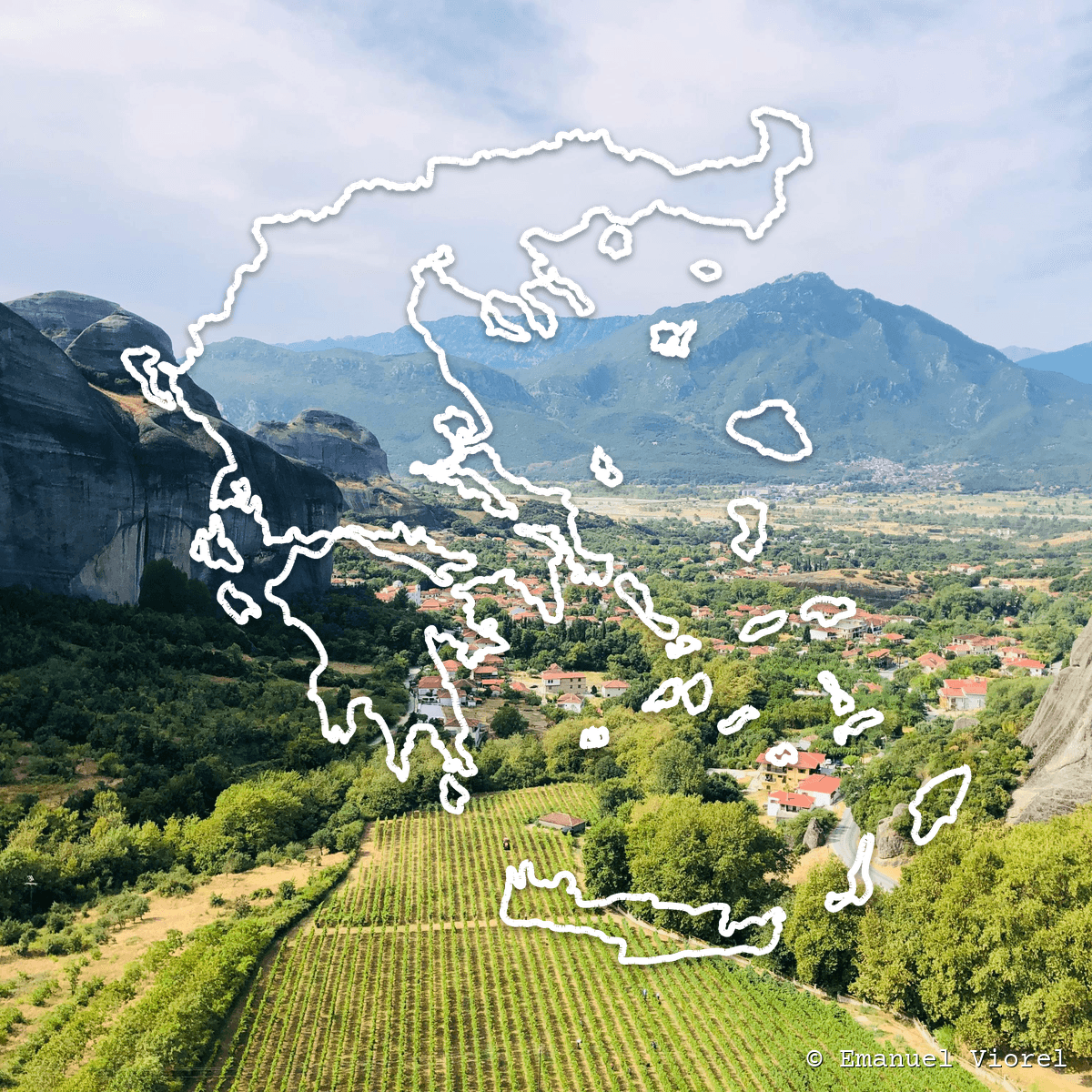
Greece

Greek wines

Greece has been making wine for longer than France or Italy, and its grape varieties reflect that depth. Assyrtiko thrives on Santorini's volcanic ash, where vines are trained in low basket shapes to shield the fruit from Aegean winds. Xinomavro, grown in the cooler northern highlands around Naoussa and Amyndeon, produces reds with high acid and firm tannin that age in a way unusual in the Mediterranean. These are not international varieties adapted to a local climate; they are grapes shaped entirely by Greek soil.

Previous1 of 1Next

Greek wine cases

On Free Grape Society, Greek producers ship directly from their own cellar, with no importer, agent, or warehouse in between. Wines are tasted before listing, and the producers set their own prices. If you are unsure where to start, an independent wine expert can point you toward the right grower and the right bottle for what you are eating.

View all mixboxes from Greece

Wine experts

Independent wine experts on Free Grape Society rate and review wines they have personally tasted. Their reviews are visible on each wine page and on the expert's own profile, alongside their track record and the range of wines they have covered. Several of the experts listed here have reviewed Greek wines and can offer a recommendation based on what you are looking for.

View all wine experts

Frequently asked questions

How do I order a Greek wine case?

Choose the case from a producer whose region or grape variety interests you, add it to your order, and check out. Each case is six bottles from one producer, shipped directly from their cellar. Delivery takes an average of eight to nine days, within a four-to-fourteen-day range depending on where you are. You can pay by card or through Klarna.

What happens if a bottle arrives broken or doesn't taste right?

Send a photo to Free Grape Society customer support within 7 days of delivery. We will arrange a replacement or a refund. Because producers ship directly, quality issues are handled with the producer's direct involvement. Shared responsibility is built into how FGS works.

Can I order a Greek wine case alongside wines from other countries?

Yes. A case ships from its producer's own cellar, so if you add wines or cases from different producers in your order, they may arrive in separate deliveries. Each shipment comes directly from its producer, with no central warehouse combining them. Free Grape Society handles the shipping coordination from the producer's end.

How long does delivery take?

Average delivery is 8 to 9 days from order to door. The full range is 4 to 14 days depending on the producer's location and your delivery address. Wines ship directly from the producer's cellar, not from a central warehouse.

How do I find the right Greek wine case for my taste?

Start with the region or grape variety that interests you. A producer in Naoussa working with Xinomavro will compose a very different case from one on Santorini growing Assyrtiko on volcanic soil. Reading the producer's own description of their six-bottle selection is often the clearest guide. You can also ask a wine expert through the advice service if you want a more personal recommendation.

How does a Greek wine case differ from just picking six individual bottles?

A case is the producer's own selection — the grower has decided which six bottles best represent their range or tell the clearest story about their estate. That considered sequence is something you do not get when picking six bottles at random. It is also a practical introduction to one producer: after the case, you have a clear sense of their style and which of their wines to return to.

Which Greek wine expert can recommend something for me?

Several independent wine experts on Free Grape Society have reviewed Greek wines and can point you toward a producer or style that suits what you are looking for. Use the wine-advice service to put your question to an expert directly — they respond based on what they have personally tasted, not on a general list.

Why are Greek wine cases always 6 bottles from one producer?

Because a case built around one producer is honest in a way a mixed-cellar case cannot be. Six bottles from one Greek grower tell you something coherent: about the estate, the grape, the region, the vintage decisions. A mix of bottles from several producers might look varied, but it does not help you understand any one of them. The producer composes the case as their own recommendation — that is the point of it.

Can I buy a Greek wine case if I usually buy from a specialist wine shop?

Yes, and the main difference is where the wine comes from. A specialist shop sources through importers and distributors, which means several hands between the cellar and yours. On Free Grape Society, the producer ships the case directly, so the wine has not sat in an intermediate warehouse. For Greek wines in particular — where volcanic and high-altitude conditions produce wines that reward careful handling — that direct journey matters.

Wine regions of Greece

Greece has 33 officially demarcated wine regions, spread across the mainland, the Peloponnese, and dozens of islands. The conditions vary sharply: Naoussa in northern Macedonia sits at 350 metres above sea level and produces structured reds from Xinomavro, a grape that shares Nebbiolo's acidity and tannic backbone but is grown almost nowhere outside Greece. The Aegean Islands — Santorini chief among them — produce Assyrtiko on volcanic soils with almost no rainfall during the growing season, which forces the vine to reach deep for moisture and concentrates the grape's naturally high acidity. Crete, the largest wine-producing island, has its own indigenous varieties: Vidiano in white and Kotsifali in red are both underrepresented in export markets. The Peloponnese region of Nemea is the primary source of Agiorgitiko, a grape capable of producing everything from light, early-drinking reds to age-worthy bottles with 15 or more years in the cellar. Patras, also in the Peloponnese, produces Muscat of Patras — a fortified sweet wine with PGI status that has been made in the region since the medieval period. Greek wine labelling follows EU rules, meaning PDO (Protected Designation of Origin) and PGI (Protected Geographical Indication) appear on labels alongside regional names that rarely appear on European supermarket shelves.

Signature grapes of Greece

Greece has over 300 documented indigenous grape varieties, of which fewer than 30 are in commercial production at any meaningful scale. Assyrtiko is the most internationally recognised: it originates on Santorini, where vines trained in a low basket shape called kouloura protect grapes from Aegean winds. Old Assyrtiko vines on the island are often pre-phylloxera, meaning they were never grafted onto American rootstock after the 19th-century epidemic that destroyed most of Europe's vineyards. Xinomavro — the name translates literally as 'acid black' — is the dominant red grape of northern Greece and the sole permitted variety in Naoussa PDO wines. It is high in both tannin and acid, ages well, and is occasionally compared to Barolo in structure, though the two grapes are genetically unrelated. Malagousia is a white grape that was nearly extinct in the 1970s before being rescued by a single producer in Epirus. It is now cultivated across several regions and produces aromatic whites with stone fruit and floral character. Moschofilero, grown primarily on the high-altitude Mantinia plateau in the Peloponnese at around 650 metres, produces pale-coloured, low-alcohol whites with pronounced aromatics. Roditis is a pink-skinned grape used widely across the mainland for light, dry whites. For those interested in how indigenous grapes perform in other European contexts, orange wines, white wines, and red wines from producers across the continent offer useful comparison points.

Climate and terroir in Greece

Greece is not climatically uniform. The country spans roughly 800 kilometres from north to south, with Mediterranean, semi-arid, and highland continental conditions all present within its borders. Average summer temperatures in the Cyclades exceed 30°C, while Naoussa in northern Macedonia regularly sees snow in winter and has cool nights during the growing season that preserve grape acidity. Santorini receives less than 250mm of annual rainfall — less than most desert definitions — meaning vines subsist almost entirely on moisture drawn from morning fog and volcanic subsoil. The island's pumice and volcanic ash soils drain rapidly and contribute to the mineral character associated with Santorini Assyrtiko. In contrast, Drama in northeastern Greece has a more continental climate with higher rainfall and cooler temperatures, and it has emerged as a region capable of producing international varieties — Cabernet Sauvignon, Merlot, and Syrah — with structure that compares to northern European benchmarks. Greek producers have increasingly moved toward altitude viticulture as average temperatures rise: vineyards above 600 metres now account for a growing share of premium production. The combination of Greek indigenous varieties with genuinely diverse terroir conditions means the country produces a wider stylistic range than its modest global export share suggests. Bottles ship directly from the producer's cellar — not from a warehouse in the Netherlands.