 Aegan Islands, Greece
- Body
- Acidity
- Tannin
- Fruitiness
- Aroma
- Style
- Soft & berry-rich
- Red berries
- Ferment-driven
- Pairs with
- Beef
- Goat cheese
- Mature and hard cheese
- Lamb
- Mushrooms
Your package will arrive at your doorstep within 4 - 16 days
- Garalis Winery will receive and pack your order (1 - 4 days)
- The courier will pick up your order and deliver it straight to your door
More ways to enjoy this wine
Available in the following Mixboxes:
About this wine
Food pairings by the winemaker
- Beef
- Goat cheese
- Mature and hard cheese
- Lamb
- Mushrooms
Vinification, winemaker's own words
- Soils:
- Clay, Volcanic
- Terroir:
- The terroir of Limnos is defined by its volcanic soils, low altitude landscapes, and strong Aegean winds. The island’s sandy and clay loam soils, rich in minerals, provide excellent drainage and encourage deep root growth, while the abundant sunshine and dry climate reduce disease pressure and promote full ripening. Cooling sea breezes and the persistent “Meltemi” winds help preserve acidity and aromatic intensity in the grapes, creating wines that are fresh, structured, and distinctly expressive of their island origin
- Harvest:
- Picked by hand
- Fermentation:
- Steel (100%)
- Storage:
- Steel (100%) 5 months
- Winemaker:
- Emmanouil Gkaralis
The grape arrives at the winery in small crates. The bunches are placed whole in the tank, they are slightly broken at the base and the alcoholic fermentation begins spontaneously, mainly intracellularly (carbonic maceration) and with continuous wetting of the bunches with the juice from the broken grape. After 12 days, there is an explosion in total and the fermentation is completed. The wine is sent to the press, while after desalination, it is bottled without stabilization or filtering.
Meet the wine maker
Emmanouil GkaralisAbout the wine and its character
- Country:
- Greece
- Region/Subregion:
- Aegan Islands/Lesvos
- Classification:
- -
- Certification:
- Organic, Natural
- Grape:
- Limnio 100%
- Vintage year:
- 2024
- Color:
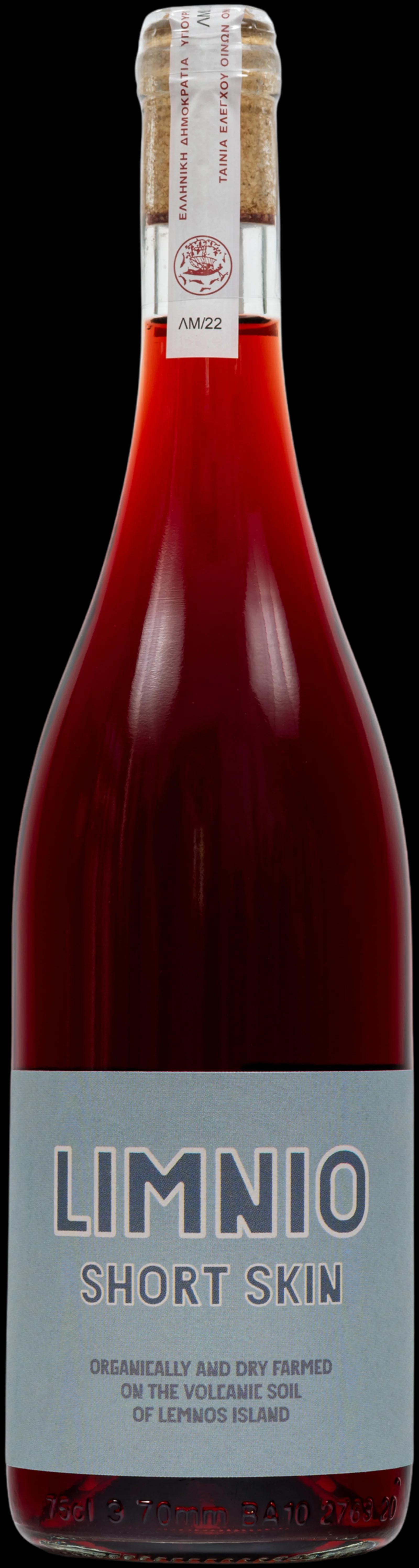
- Light red
- Aroma:
- A wine with a wonderfully youthful character and aromas of cranberries, strawberries, red cherry and violets.
- Taste:
- Refreshing acidity, moderate, balanced alcohol and body, soft tannins and persistent aftertaste. A straight, cool and youthful red wine.
- Alcohol content:
- 12%
- Sugar content:
- 1 g/l
- Acidity:
- 5 g/l
- pH-value:
- 3.7
- Sweetness:
- Dry
- Contains sulphite:
- Yes
- Volume:
- 750 ml
- Closure:
- Synthetic cork
- Bottle:
- Glass
- Best Served:
- 12 - 16 °C
- Ageing potential:
- 0 - 3 years
Meet the winemakers behind Limnio Short Skin
Information provided directly by the winery.

Information
- Winery
- Garalis Winery
- Founding year
- 2007
- Farming area
- 5 ha
- Production
- 60 000 b/y
Garalis Winery is a family owned winery located in Agios Dimitrios on the Greek island of Limnos. What began as the dream of Manolis Garalis and Maria Markaki around 2000 became a reality with their first harvest in 2007. The winery produces a diverse range of wines, from gentle-intervention whites and orange wines with extended skin contact to rosés, reds, and high-end retsina styles, reflecting both tradition and innovation. Surrounded by Limnos’ unique terroir and indigenous vineyards, Garalis Winery welcomes visitors to taste its wines and explore the vineyards in their natural setting.
Meet Garalis Winery