PLANASSOS
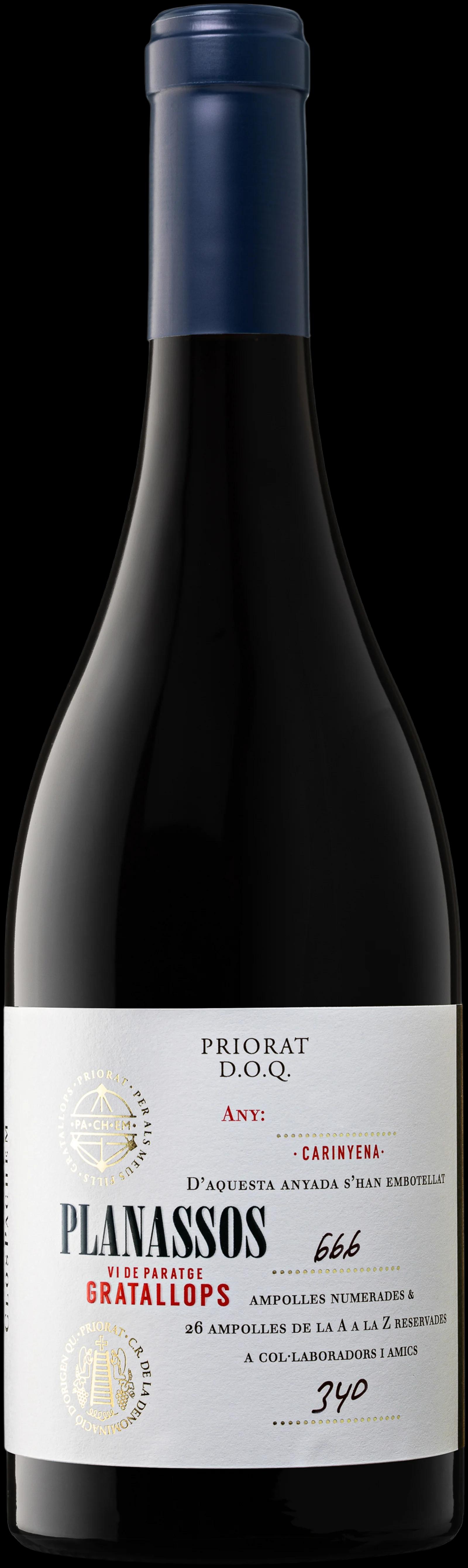
PLANASSOS
Price incl. alcohol tax, shipping and VAT.
Winemaker's notes
Your package will arrive at your doorstep within4 - 16 days

CLOS PACHEM will receive and pack your order (1 - 4 days)
The courier will pick up your order and deliver it straight to your door
Product details
About the wine and its characterCountry:
Spain
Region/Subregion:
Catalonia/Priorat
Classification:
DOC / DOCa
Certification:
-
Grape:
Carignan (100%)
Vintage year:
2020
Color:
Red ruby colour with violet hues.
Aroma:
Intense aromas of black fruits and flowers, with violet and spicy notes such as clove, cardamom and tobacco. It is a complex aroma, reminiscent of the typical characteristics of Carignan.
Taste:
On the palate it is elegant, complex, vibrant and intense. Notes of ripe black fruit and spicy notes combine with the acidity on the palate. Soft and velvety tannins, subtle but present. Long and persistent aftertaste.
Alcohol content:
14%
Sugar content:
0.5 g/l
Acidity:
5.3
pH-value:
-
Sweetness:
Dry
Contains sulphite:
Yes
Volume:
750 ml
Closure:
Natural cork
Bottle:
Glass
Best Served:
12 - 16 °C
Food pairing:
Beef, Charcuterie, Cheese - goat cheese, Cheese - mature and hard, Cheese - mild and soft, Lamb, Pork, Poultry, Veal
Ageing potential:
3 - 15 years
Food pairings by the winemaker
- Beef
- Charcuterie
- Cheese - goat cheese
- Cheese - mature and hard
- Cheese - mild and soft
- Lamb
- Pork
- Poultry
- Veal
Vinification, winemaker's own words
Soils:
Slate
Terroir:
Steep, terraced vineyards planted on poor, rocky llicorella (slate) soils. This fractured slate retains heat and forces vines to root deeply, producing low yields and intense concentration. Mediterranean cimate with hot, dry summers, cool nights, and limited rainfall.
Harvest:
Picked by hand
Fermentation:
Steel (100%)
Storage:
Amphora (100%) 12 months
Winemaker:
PEP RIBA
Hand-picked grapes by our team in 12 kg crates on 16 September, with a first selection in the vineyard and another in the winery. Fermentation is made using indigenous yeasts from the grapes in a 500-litre tank, where they are gently crushed for 20 days in order to obtain a subtle extraction. Afterwards, malolactic fermentation takes place spontaneously and is followed by ageing in ceramic eggs.
About CLOS PACHEM
Information provided directly by the winery.

Information
Clos Pachem is a boutique winery in Gratallops, in Priorat, founded in 2015 by Michel Grupper. Its philosophy focuses on elegance, freshness and terroir expression, offering a refined vision of Priorat. Working mainly with Garnacha and Cariñena, the wines show vibrant fruit, minerality and balanced structure. Vineyards are farmed organically, biodynamic and regenerative with hand harvesting and strong commitment to sustainability.